


(Cover art by André Ducci)
I knew my last post would get some resistance!
After publishing my recent piece on Silicon Valley and culture, I received two thoughtful responses that pushed back on the central claim that Silicon Valley, despite its civilizational scale of power, lacks foundational culture. Both responses are worth taking seriously, because they articulate the strongest version of the counter-argument (and because they help clarify where the real disagreement lies).
The first objection from Andreas goes roughly like this:
Your essay reads like an outsider’s view. It conflates the most visible figures associated with Silicon Valley (Thiel, Musk, Andreessen) with Silicon Valley itself. Anyone who has spent real time on the ground knows that this picture doesn’t describe the Valley’s deeper, more durable culture, particularly the semiconductor and hardware industries that formed its roots. What you’re seeing is not cultural emptiness, but cultural capture: a financialized elite imposing itself on top of a longstanding engineering culture with very different values.
The second objection from Alex is somewhat related:
Silicon Valley does have an architecture of meaning. It has symbols, myths, and a story about purpose (AI, robots, spaceflight, immortality, automated luxury futures). It may be a culture we dislike, but that doesn’t mean it isn’t culture. Cultures co-opt symbols all the time. Burning Man counts as culture. GIFs count as culture. It’s not a literary culture, and neither were the Inca. It’s a trading and production culture, so comparing it to Florence or the Catholic Church may be the wrong benchmark. A better comparison might be the Hanseatic League or industrial Manchester.
Taken together, these critiques argue that Silicon Valley is neither hollow nor culture-less. It is either:
A real culture that we simply don’t like, or
A real culture that has been temporarily overrun by extractive finance, but could be recovered if that layer were stripped away, or
A real culture that is being compared to the wrong benchmarks.
These arguments are intelligent and worth discussing! However they are, in my opinion, slightly misaligned with the deeper structural point.
The Real Question Is Direction, Not Existence
The disagreement here is not about whether Silicon Valley has symbols, values, stories, or norms. Of course it does (and I’ll agree with Alex that they are far from literary or intellectual!). Rather, our disagreement is about which way causality runs.
Importantly, in historically durable systems, culture propagates forward:
Culture → Institutions → Markets
Culture supplies meaning and legitimacy, which are then encoded by institutions in a way such that markets can operate within it.
In Silicon Valley, what we observe instead is the reverse:
Markets → Temporary norms → Aestheticized “culture”
So in this system, we can actually see something really unique:
Capital conditions generate symbols,
Liquidity produces values,
Investment cycles fabricate meaning-systems
And all of this together kind of feels like a “Silicon Valley culture”, until it is suddenly abandoned as soon as the market cycle turns. (I’ll go into specific examples on this shortly!).
Thus, this is not a debate about definitions but more of a structural observation about directionality: meaning flows backward from markets instead of forward through institutions, leaving nothing stable enough that will endure a generations-scale horizon.
Venture Capital as a Reverse Culture Generator
One way to see this clearly is to stop talking about “Silicon Valley culture” as a single entity, and instead look at the successive venture-capital cultures that have come and gone.
Both Alex’s and Andreas’ points bring this up: both of them have said “There is culture! Look at XYZ!”. And indeed yes, each of these phases they bring up had symbols, myths, rituals, and a story about purpose.
What is striking, though, is that when people point to “Silicon Valley culture,” they rarely point to the same one. One points to the early engineering ethos; another to the hacker-libertarian phase; another to Burning Man, or crypto, or AI accelerationism. Each of these is offered as proof that culture exists.
And that is precisely the point. These are not competing descriptions of a single enduring culture. They are references to different, successive cultures that rose and fell with changing capital conditions. Each of these cultures felt coherent from the inside. None, however, have endured.
Thus, the very fact that defenders of Silicon Valley culture must point to different cultures at different moments is not a rebuttal of the argument. It is actually my very argument.
Culture, in the civilizational sense, accumulates. It transmits memory, stabilizes identity, and survives shifts in power and incentives. What Silicon Valley exhibits instead is continual cultural turnover: meaning-systems that emerge, dominate briefly, and disappear when the market cycle turns.
So I’ve come up with the following, which is not a cultural evolution (as would happen with a definitional culture), but cultural turnover (as we see with SV).
A Brief History of Silicon Valley’s Rotating Cultures
For reference, I kind of just made this up, and it’s clearly very subjective, but feels like I’ve hit the main points. I don’t think I’m missing any major era, although even if I am, you’ll get the point…
Cold War Technocracy (1950s ~ 1970s)
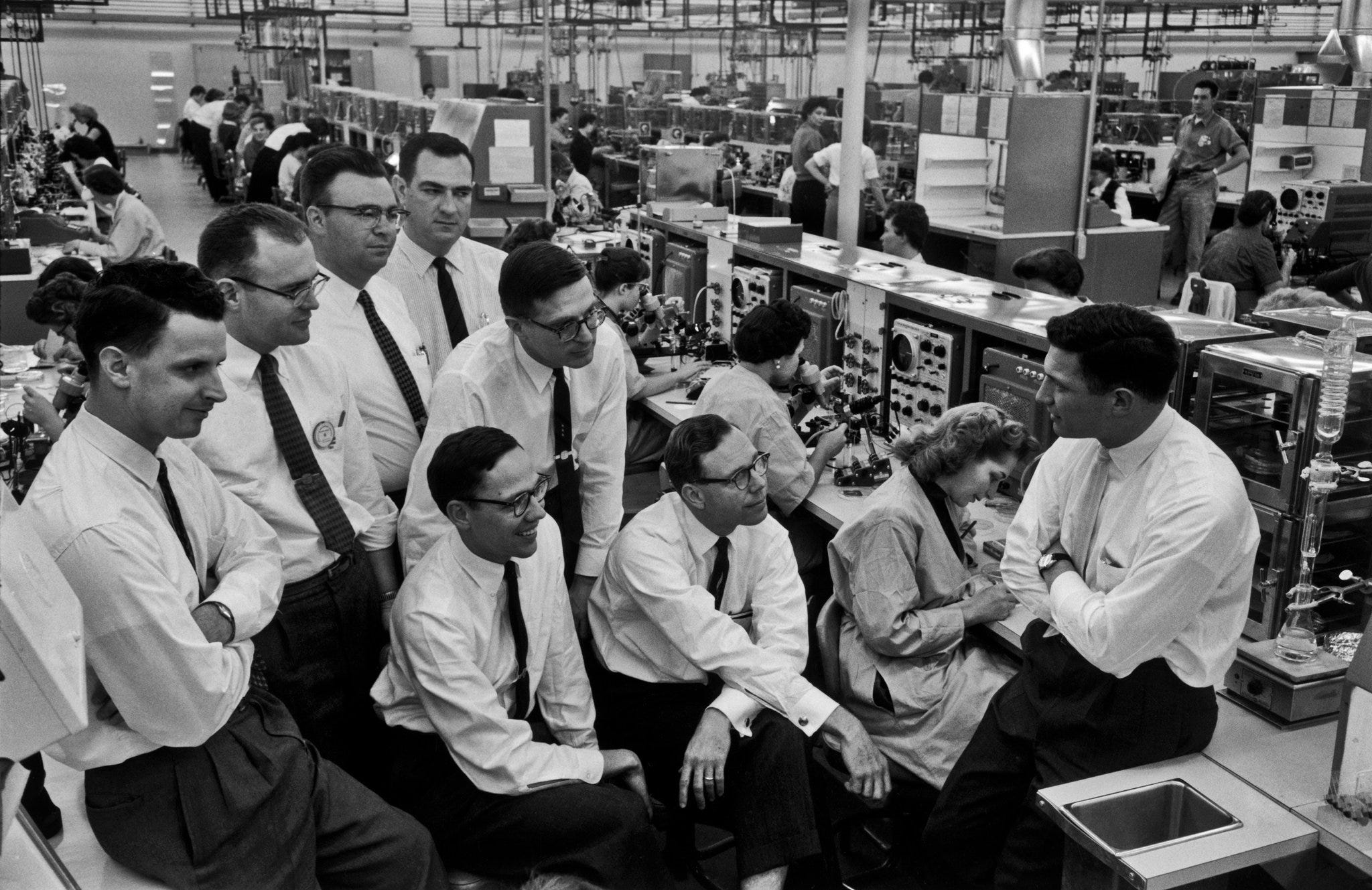
Defense funding, Bell Labs, Fairchild, mainframes, space race symbolism. (This is what Andreas was referring to!). Meaning in this period was derived from geopolitical imperative and technical mastery. This meaning faded as capital decentralized and computing personal-ized. (I.e. the “Big Computer Lab” era fragmented).
Hacker–Libertarian Phase (1970s ~ 1980s)
The “early VC” and “I’m sooo contrarian” era. Garages, Homebrew Computer Club, UNIX, “information wants to be free” kinda stuff. Meaning came from personal liberation through computing, as a strong ideological belief (I.e. Open Source as a philosophy).. This started to disappear once scale, institutional money, and professionalization arrived.

Dot-Com (~1990s)
Dodgy personal websites, sock puppets, IPOs boom! And here meaning came from the belief that the internet would flatten everything through rapid information movement. This culture imploded with the crash.

The Founder-Hero / PayPal Mafia Era (~2000s)
Google, Amazon, “Visionary CEOs” and exceptional individuals, platform monopolies, the arrival of winner-take-all logic. Meaning came from civilizational progress driven by rare men (gulp). This hardened into the ideology of moving fast and breaking things as a defense of its massive power and capital accumulation.

Web 2.0 Social Optimism (late 2000s ~ early 2010s)
This is the era Alex is referring to in his argument. Facebook. Democratization-of-everything! Feeds, graphs, “connecting the world”. Meaning came from the belief that scaling engagement would automatically produce community and progress. Burning Man and techno-neo-tribalism (radical self-expression, communal vibes). This phase eroded as surveillance capitalism, algorithmic manipulation, and visible social harm made the optimism untenable.

Crypto Maximalism (2017 ~ 2022)
From here it starts to really go downhill. Tokens, DAOs, laser eyes, trustless systems, WAGMI, NGMI, HODL, etc. Meaning came from replacing “untrustworthy” institutions with diamond hands maximalism. This collapsed under fraud and volatility. Oh, and the emergence of a thing called interest rates.

AI Accelerationism (2022– tbd)
Sigh. GPUs, AGI timelines, existential rhetoric around geopolitical imperatives. Adding zero’s to the end of valuations for shits and giggles. Meaning comes from capital deployment with scale and velocity never seen before to avoid an apparently inevitable apocalypse (which, as Peter Thiel warns us, will be at the hands of the Antichrist, who may or may not be Greta Thunberg). Its durability remains an open question, but as I have written about before, this is where bailouts are going to most likely arrive. Meaning that… decline feels imminent.

Now, here’s how each of these eras maps onto very specific capital-market conditions at the time, to show the relationship between the Valley’s symbols and narratives, and changes in market conditions:
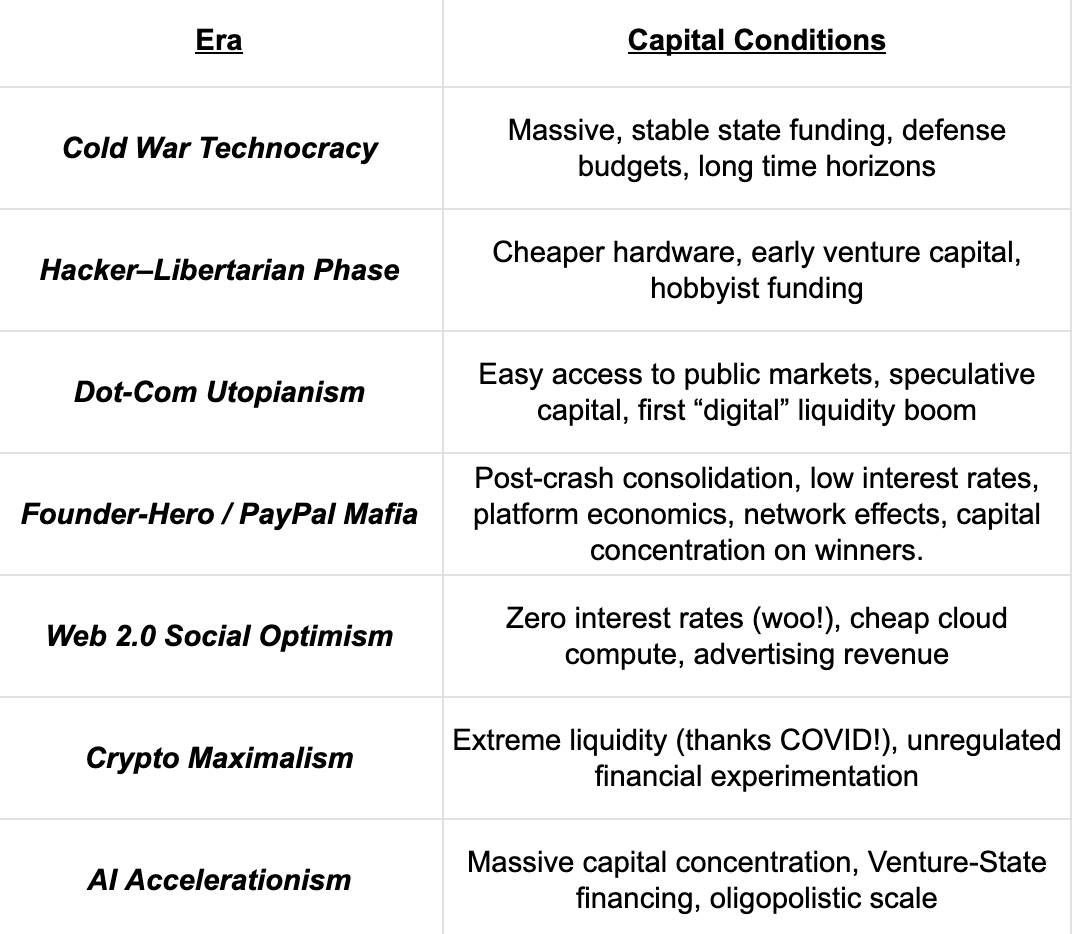
(Apologies for pasting from Sheets - I have not figured out how to do tables in Substack yet 🫠)
What this mapping makes clear to me is that the “cultures” people associate with Silicon Valley are not upstream forces shaping markets! In fact they are downstream effects of capital regimes.
In each case, shifts in funding structures, liquidity, risk tolerance, and time horizons came first. Institutions (VCs and adjacent firms) adapted to those conditions, and only then did symbols, values, and meaning-systems emerge to make those arrangements feel coherent, justified, or even (I hesitate to say this) virtuous.
So, culture did not stabilize markets! But actually, markets propagated backward through institutions into culture. In Silicon Valley, meaning has repeatedly followed money:
Patient capital has produced the early desire for mastery over long-term deeptech
Abundant capital has produced culture of information liberation
Concentrated capital has produced hero mythologies (Musk! Bezos! Palmer Lucky!
Speculative capital has produced decentralization and “price” (of bitcoin, crypto) as trust currency.
So we can see that when capital regimes changed, the associated “culture” dissolved with them.
This is the inverse of historically durable systems, where culture accumulates forward through institutions and constrains markets over time. In Silicon Valley, meaning has repeatedly followed money, not the other way around.
Why This Isn’t Civilizational Culture
The crucial point is not that these phases lacked meaning, because they clearly did not. Each era generated symbols, values, rituals, and a story about purpose that felt both dominant and coherent from the inside. People lived inside these worlds, organized their work around them, and often believed in them sincerely. (How or why, I’m not entirely sure…)
The problem instead is that none of these meaning-systems accumulated. They did not:
Persist across generations.
Stabilize institutions against capture.
Survive shifts in capital regimes.
Constrain markets when incentives changed.
Instead, they have reset, repeatedly. As in, they have been destroyed and started again, in new and increasingly strange forms.
That pattern is not incidental. It tells us exactly what kind of system this is!
Let’s go back to defining “culture” in the structural sense that I am discussing here:
A “culture” in this civilizational sense does not merely exist; it is one that governs. It accumulates memory, transmits norms over time, and retains authority even as political arrangements collapse or economic conditions change.
Going back to the two examples I gave before, Florentine humanism survived factional violence, political invasions, and the rise and fall of ruling families. The Catholic ritual endured schism, corruption (as it does to this day), and the long arc of institutional decay. In both cases, culture outlived the specific institutions that expressed it, and in doing so provided continuity, legitimacy, and constraint.
As I have said, Alex’s argument (correctly) states that Silicon Valley should be compared not to religious or artistic civilizations, but to trading and commercial powers like Manchester or the Hanseatic League.
(I love this point, by the way…)
The problem, though, is that those systems still depended on governing cultures that preceded and constrained their markets. Silicon Valley does not.
Consider that the Hanseatic League was not merely a “network of traders”. It was governed by infamously shared legal norms, reputational ethics, moral obligations, and enforceable collective discipline that constrained market behavior across many cities and many generations. Importantly, commerce operated within a cultural framework it did not control.

Soldiers of the Hanseatic League, 15th century
Similarly, nineteenth-century Manchester was embedded in the dense moral and institutional world of Protestantism, religious ethics, class identity, labor politics, civic duty; all of which contested, constrained, and eventually reshaped industrial capital. These markets were powerful, but they were nonetheless still forced to justify themselves against norms they had not created.
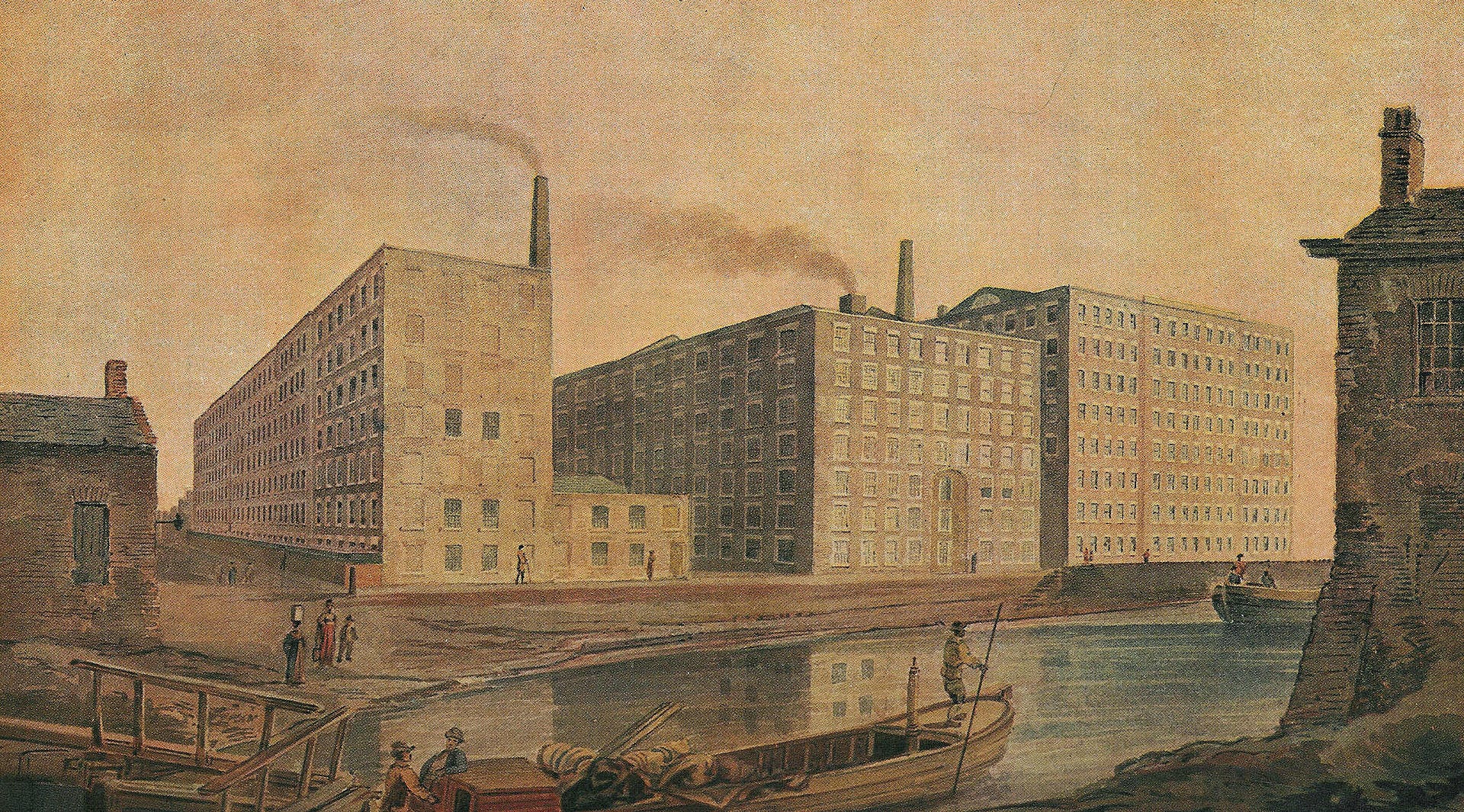
McConnell & Company’s cotton mills in Ancoats ~1840
The Hanseatic League and Manchester were commercial systems governed by culture. Silicon Valley is a commercial system that continually re-manufactures culture to match its markets.
Silicon Valley does not resemble these systems in the way that matters here.
By contrast, Silicon Valley’s meaning-systems have repeatedly proven unable to survive financialization.
This, too, is where the “Silicon Valley is under attack” argument ultimately fails. It assumes the existence of a governing culture that has been temporarily overridden by an external force. But if a culture can be so thoroughly displaced by capital forces (indeed, if it cannot constrain markets, resist capture, or reassert itself when incentives shift), then it was never the coordinating layer of the system in the first place.
Going back to the “original” Silicon Valley of semiconductors etc, the “engineering” cultures that collapse under financialization are real cultures. They matter, of course. But they are professional subcultures, not civilizationally dominant ones. They organize work inside firms and sectors, sure, but they do not supply a symbolic order capable of governing markets or legitimating institutions at scale.
The difference is important because civilizational culture does not need to win every battle to endure. It only needs to remain authoritative enough that institutions bend rather than break, and markets are forced to operate within the already-decided limits.
Thus, when culture governs, power answers to shared norms and expectations. When it does not, power rewrites those norms to suit its interests. The latter is what we see with Silicon Valley.
Yes, you could (and many do) argue that Silicon Valley shares a philosophy of growth and of maximizing returns at any cost. But a philosophy of accumulation is not the same thing as a governing culture! Philosophy only tells a system how to succeed. Culture is actually what sets limits on what success is allowed to mean.
Hence, a governing culture can say no to profitable actions, survive downturns without screaming for the Fed to intervene, and restrain power even at its peak. Silicon Valley’s philosophy clearly cannot do these things. Because when profit becomes the only measure of legitimacy, nothing outside the market can constrain the market.
So what Silicon Valley exhibits, again and again, is not cultural continuity but cultural replacement. “Meaning” arrives late, follows money, and disappears when the capital markets change. That is not culture that stabilizes institutions and thus stabilizes markets. It is simply the markets manufacturing culture on demand.
And that is why Silicon Valley’s power, however vast, remains structurally fragile.
So Is Silicon Valley Cultureless?
No, of course not. But its cultures do behave like derivatives of capital rather than foundations of meaning.
Silicon Valley does not transmit culture forward through time via institutions and in ways that govern its markets. Rather, it rotates specific subcultures that rise and fall with each shift in capital conditions.That distinction matters, because only governing cultures can stabilize power when capital cycles turn and market conditions reverse.
Silicon Valley is not under attack from financialization; it is actually organized around it. It may contain serious engineering traditions, and it may tell stories that feel meaningful from the inside. But the continual replacement of its symbolic systems is not a rebuttal of this argument, it is the evidence of it.
Durable cultures constrain markets, through its institutions. In Silicon Valley, markets back-propagate to repeatedly manufacture culture instead.
That is not a moral judgment, it is simply a structural observation! And in my opinion, explains the paradox of Silicon Valley’s simultaneously extraordinary power, and its fragility.
In one of his later non-fiction works, tbe great Tom Wolfe dug into the early history of SV. Book is Hooking Up (2000), lengthy piece is Two Young Men Who Went West.