


Hi! Because it’s a Friday, I’m about to treat you to a three-part (Wow! Three parts!) special on… drumroll… the Chinese Central Bank.
(How many people are going to unsubscribe, unable to contain their excitement with my Substack topics? Let’s see…)
Part One: What does the People’s Bank of China do?
Part Two: What tools does it have to do this?
Part Three: What does the People’s Bank of China do if/when the Chinese economy collapses?
Part Four: How do the US, European and Chinese economies actually collapse?
Let’s dive in!
This series is inspired by the dumbest article that I was reading yesterday about whether or not China’s central bank is independent, and it made me realise something surprising: most people are asking the wrong question entirely.
The way the debate is framed: “Is the central bank independent? Is it controlled? Is it political?”... sounds sensible only if you grew up thinking that the American central bank, the US Federal Reserve (the Fed), is the template for how all central banks should work. Or that Europe’s central bank, the ECB, is the global standard everyone is supposed to follow.
But China’s central bank, the People’s Bank of China (PBoC), is definitely not trying to copy the Fed or the ECB. And once you understand that, the whole question of “is China’s central bank independent?” becomes almost irrelevant.
The real question isn’t whether China’s central bank is shielded from politics or not, but what the bank is even for in the first place!

You see, in the US and Europe, central banks are designed to stand apart from the government so they can make unpopular decisions without getting yelled at by politicians. That’s why the word “independence” is so important in Western economics. (And why Trump’s involvement with the US Federal Reserve and trying to fire one of its governors is so crazy!).
But China is not Europe, or the United States. China built its political and banking systems for completely different reasons.
The PBoC was never meant to function as a detached overseer, issuing “market signals” from a distance and adjusting interest rates to keep investors happy (wait, did I just say the quiet part out loud?). Instead, its role is internal: to shape and guide the financial system so it aligns with the country’s wider economic and developmental goals.
In that sense, China’s central bank acts less like a traditional central bank in the West and more like a kind of organising tool, helping to keep everything moving in the same direction.
This isn’t a flaw or a failure; it’s simply just the design. Which is why describing the PBoC as either “independent” or “controlled” misses the point. Neither word captures what it actually does. The closest description is that it’s orchestrated, and part of a larger structure that’s built to move together, not in separate pieces.
A Bank, With Chinese Characteristics
Before we dive into China’s model, it’s worth reminding ourselves what a central bank actually does in the systems we’re more familiar with!
Institutions like the Federal Reserve or the ECB are built around a clear intellectual template: they set short-term interest rates, communicate policy signals to shape market expectations, and target inflation as the primary measure of macroeconomic stability.
Their credibility is meant to come from their distance; from being insulated from political pressure so they can commit to long-term monetary consistency.
And to be fair, Western central banks insist on independence out of pure theory. Let’s not forget that they hold a bat-shit-crazy amount of power. When the Fed or the ECB moves a single rate or hints at a future change, trillions of dollars shift across global markets. Some people make staggering amounts of money on those signals; others lose fortunes.
After 2008, when central banks stepped in to rescue financial systems and became the main stabilising force in the economy, their power grew even larger. They were no longer just adjusting interest rates, they were shaping asset prices, influencing housing markets, and effectively deciding who gets liquidity and who doesn’t.
In that environment, independence became an incredibly important form of protective shield.
If a central bank can move markets on a scale that makes and breaks entire industries, the argument goes, it should be kept far away from political interference. Hence the Western insistence on this model:
Independence = credibility,
Monetary policy = interest rates,
The goal = stable inflation.
It’s a simple framework, and it works reasonably well for economies built around price signals, private credit markets, and investor expectations. (Until, that is, it doesn’t).
But China built something different.
Its model rests on integration, not separation. And monetary policy is less about manipulating the cost of money (again: interest rates) and more about directing the flow of credit. While inflation matters, the overriding priority is stability: political stability, financial stability, social stability. This is not a purely semantic difference; it’s an entirely different theory of how a financial system should be governed.
This is where most Western analysis derails. It looks at the PBoC through the independence lens and concludes that China’s system is distorted or deficient. But that’s like evaluating an orchestra by asking whether the conductor is “free” from the musicians. In China’s model, the point is coordination, not autonomy, and keeping every part of a vast, complex financial system aligned with the broader direction of the Chinese Communist Party. The conductor isn’t meant to step away from the orchestra; because she’s meant to be holding it together.
Once you understand that philosophical mismatch, China’s monetary system stops looking improvisational, as many believe it to be. And it then becomes exactly what it is: a central bank designed for a different kind of world, solving a different set of coordination problems, using tools that make perfect sense inside the architecture that built them!
What does the PBoC Actually Do?
Ok! Now that I’ve cleared away the “independence” debate, we can finally ask the real question:
What is China’s central bank actually built to do?
Because this is where the system becomes fascinating.
The first thing to know is that the PBoC sits inside a party-state system. That’s not just a political label, it’s how almost every major institution in China works, including big companies.
In the US or Europe, we imagine separate, independent actors: firms, regulators, courts, and the central bank- all operating separately from each other. In China, those lines don’t exist. Institutions are meant to align with one another, not operate in isolation. To Westerners, that feels strange because we assume independence equals legitimacy. In China, legitimacy comes from coordination.
Once you see that, the role of the central bank looks very different. The PBoC isn’t trying to be a detached asylum adjusting interest rates from afar. Its job is internal: to guide financial activity so it supports the state’s bigger economic goals. That doesn’t make it weak or overly political, it makes it a core part of the governing system.
And because it’s integrated, the tools it uses look different too.
Instead of steering the economy mainly through interest rates like the Fed or the ECB, the PBoC directs the flow of credit. It can nudge banks toward certain sectors, rein in lending where risks are high, and channel money into strategic areas. Tools like lending targets or quiet guidance sound unusual in the West, but in China they’re completely normal!
This also explains why “stability” means something broader in China. It’s not just controlling inflation. It’s controlling jobs, property, capital flows, and the financial health of local governments. Things that Western economists treat as separate problems are all part of the PBoC’s mandate.
And the PBoC doesn’t act alone. It works closely with the NDRC (the macroeconomic management agency) and the Ministry of Finance. Again, these aren’t independent silos, they’re pieces of the same system! The PBoC wasn’t built to stand apart. It was built to coordinate.
Weak Bank, Strong Bank?
Once you understand what the PBoC is designed to do, you can see why it appears strangely contradictory from the outside. Sometimes it looks cautious, limited, even timid. Other times it looks shockingly powerful.
On the “weak” side of the ledger, the PBoC does not decide the big, strategic direction of China’s economy. That comes from Party leadership. So if the Party wants to cool down the property sector or boost advanced manufacturing or rein in debt, the PBoC doesn’t debate those goals as the Fed would, it simply implements the wishes from the Party giving the marching orders.
The PBoC can’t make major monetary changes on its own, because those decisions need political approval (and the bank definitely won’t take a path that goes against the government’s goals!). The central bank doesn’t decide the overall direction; it merely implements it.
In this way, the PBoC seems very weak compared to the Fed or ECB which holds enormous steering power.
But execution? That’s where the PBoC becomes incredibly powerful.
Unlike Western central banks, which have to influence the economy indirectly through interest rates, the PBoC can mobilize China’s enormous state-dominated banking system almost instantly.
So if it wants banks to lend more or less, it can make that happen quickly. If it wants to expand credit in one sector and tighten it in another, it has the tools to do so. It doesn’t need parliamentary approval and it doesn’t need to coax private banks with incentives. It can simply adjust the pipes through which credit flows.
And there are many pipes!
China’s central bank has instruments the Fed wouldn’t dare touch, like directing credit windows to state policy banks, setting loan guidance for commercial banks, or tightening specific lending channels without announcing a formal change in interest rates.
The PBoC also has far more direct influence over China’s management of the currency than most people realise. When the renminbi is under pressure, the central bank (often through state-owned banks) can stabilize the market very effectively. It has the ability to intervene not only with money but with regulatory authority.
This creates a fascinating paradox:
The PBoC is weak in initiation but strong in execution.
It cannot decide the grand strategy, but once a decision has been made, it can deploy an entire financial arsenal to carry it out.
The Fed, by contrast, is strong in initiation but weak in execution. It sets the agenda (such as rate hikes, rate cuts, long-term targets), but it can only influence the economy through market expectations and indirect channels. The Fed can’t call a commercial bank and tell it to lend more to manufacturing and less to property. The PBoC can. (Although, we’re now seeing that Trump is trying to figure out how to get this done himself).
Understanding this paradox helps the entire system click into place.
China’s central bank doesn’t operate like a Western-style institution because it wasn’t built to. It occupies a different role in a different architecture, with different tools and different constraints. And once you see those differences clearly, the “mystery” of China’s monetary system disappears.
What looks like improvisation from the outside is often just the system doing exactly what it was designed to do!
At this point, the easiest way to understand the PBoC is to see it as one part of a larger chain of decision-making. It isn’t an isolated institution like the Federal Reserve or the ECB. It’s a node inside a political and economic system that moves together.
The chain looks like this:
Party leadership sets the big strategic goals.
What sectors should grow? What risks matter? What should be contained, encouraged, slowed down, or sped up? These decisions are made at the political level.The NDRC and Ministry of Finance translate those goals into practical policy paths.
They decide how money should be allocated across the economy, which projects need funding, which industries need guidance, and where pressures need to be relieved.And the PBoC turns those decisions into financial reality.
It makes sure credit flows in the right direction by making sure banks lend where they’re supposed to. It stabilises markets so political decisions don’t trigger financial chaos. It uses its tools not to “signal” abstract ideas to investors via interest rates, but to implement the national strategy through the financial system itself.
Once you understand this chain, the central bank stops looking mysterious and starts looking exactly like the institution China built it to be.
The Evergrande and Property Crisis
It’s one thing to talk about models and structures; it’s another to watch the system operate in the real world. So I want to look quickly at a moment when the PBoC’s role became crystal clear, and when Western commentators, almost unanimously, read the situation backwards!
When Evergrande, one of China’s biggest property developers, started to unravel, the Western reaction was instant and dramatic:
“Lehman moment!” and “Systemic collapse!” and “China has lost control!”
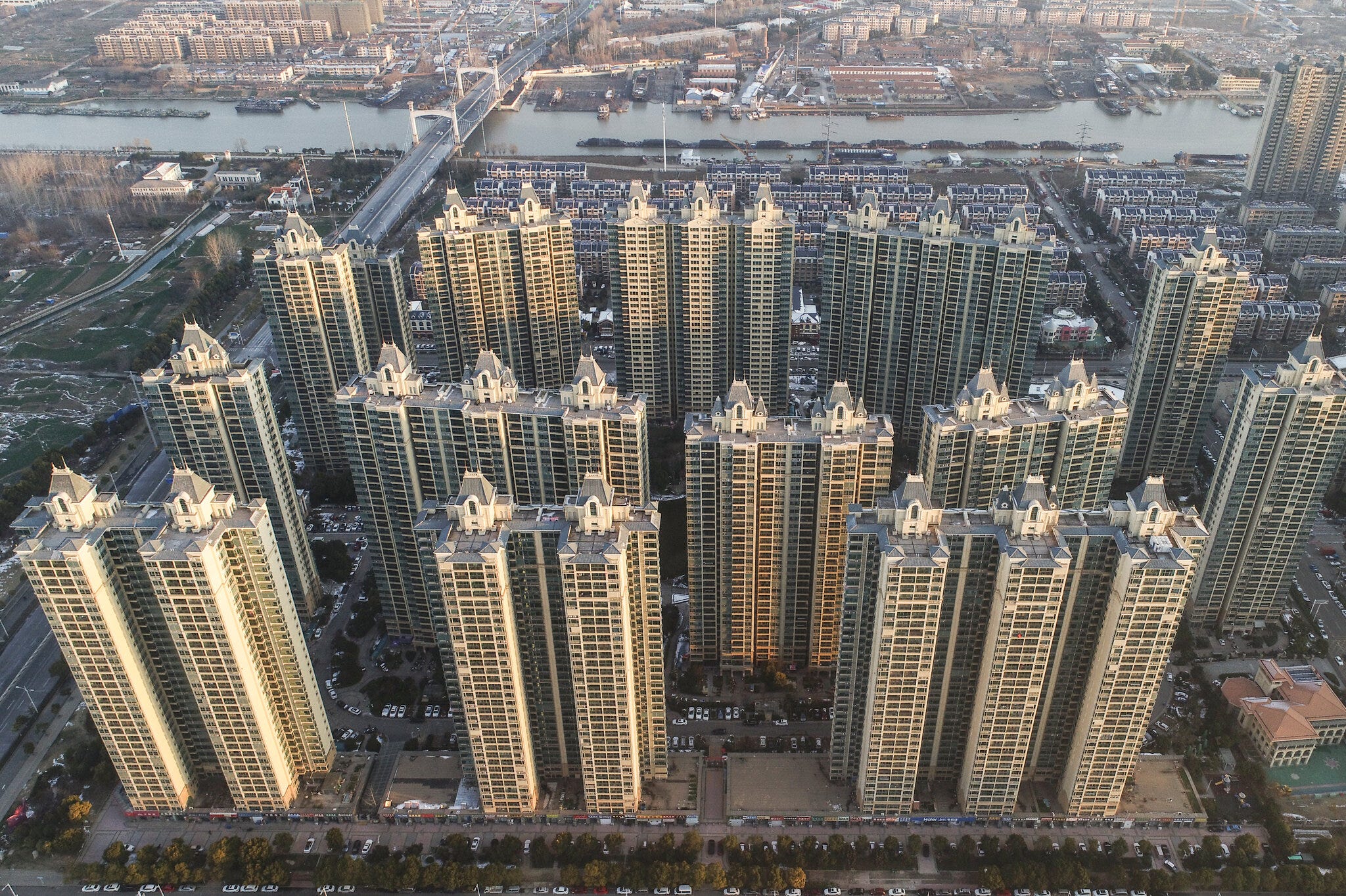
I mean, yes, it was a pretty huge fucking deal.
But if you look beneath the headlines, the actual story on the ground in China is very different. You see, these commentators assumed that the Chinese economy = Western economy. Clearly, as you now know, it does not.
Evergrande wasn’t hit by a sudden accident. It collapsed after years of reckless borrowing, bloated land purchases, and aggressive expansion (sound familiar??) all fucked up by cheap credit (hmmm..got the t-shirt). Beijing had been warning for years that the property sector needed to shrink. By the time Evergrande imploded, the government had already tightened credit to developers and introduced “red lines” to stop the most irresponsible firms from borrowing further.
In that sense, Evergrande’s failure wasn’t at all a surprise; it was the deliberate consequence of a decision to deflate the property bubble before it became unmanageable! (Yes, this is something that feels almost unthinkable in the West, where policymakers rarely have the appetite to accept short-term pain in exchange for long-term stability!!)
But here’s the part most Western analysts missed:
While the PBoC allowed Evergrande and other bad actors to fail, it simultaneously protected the rest of the system.
Discreetly, the PBoC made sure banks had enough liquidity to absorb the shock. It kept mortgage lending flowing so ordinary homebuyers weren’t frozen out. It pushed banks to keep financing unfinished construction so people wouldn’t lose the homes they had already paid for. And it ensured that credit to healthy developers and local governments continued, so the collapse didn’t ricochet through the entire economy.
Or, in other words:
The PBoC let the unhealthy part of the system burn, while fireproofing everything around it.
There was no mass panic, or banking crisis, or national freeze in credit. Ironically, this is the way capitalism is supposed to work (i.e. bad actors fail, but the overall system survives), yet it’s China’s so-called “socialist” model that managed to pull it off when the Western “capitalist” model cannot!
And yes, the Evergrande situation, let’s call it, it looked messy. Because restructuring always does. But it was a controlled mess. So what Western commentators interpreted as “chaos” was actually the PBoC doing exactly what it’s designed to do:
Manage the transition without letting it turn into disorder.
Most central banks are mandated to wait until a crisis appears and then try to put out the fire. The PBoC works the other way: it shapes how the crisis unfolds so the flames don’t spread.
Again, this is coordination, not improvisation.
Effectiveness, Not Independence.
By now, it should be clear that the PBoC doesn’t aspire to be independent in the Western sense. It aspires to be effective.
And in China’s model of “state capitalism”, effectiveness comes from integration, coordination, and the ability to move in sync with the rest of the system. The central bank isn’t a detached overlord, nor a passive observer of market sentiment; it is a mechanism for turning national strategy into financial power with an immediacy Western institutions simply cannot match.
This is why Western analysis so often misunderstands the Chinese economy. If you judge China by the intellectual categories used for the Fed or the ECB, you’ll always conclude something is broken. But if you look at what China is actually trying to optimize for (controlled risk-taking, steady restructuring, rapid mobilisation, financial containment), then the PBoC becomes one of the most interesting and coherent monetary institutions on the planet!
And this is where the story naturally leads to Part 2, where I want to look at how the PBoC actually does this, and what instruments it has at its disposal to move hoards of money through China.
Rather excitingly, I will go through:
How credit flows through China’s giant state banks
How local governments borrow through LGFVs (Wow! What is a LGVF I hear you asking!)
How shadow banking (my favorite topic!) fills the gaps the formal system can’t
How pesky capital controls shape the entire system
Why understanding these tools makes China’s economy far more predictable than most analysts admit!
Until then, comrades…