


Hi! Happy Saturday!
So now that it’s the weekend, what more inspiring things can I do than write Part Two of my Chinese central bank series!
To recap:
Part One: What does the People’s Bank of China do?
Part Two: What tools does it have to do this?
Part Three: What does the People’s Bank of China do if/when the Chinese economy collapses?
Part Four: How do the US, European and Chinese economies actually collapse?
There is a particular kind of clarity that appears when you stop thinking about China as a “market economy with quirks” and start thinking about it the way many economists do: as a state-engineered system of financial channels, designed for controlled capital flow rather than market discovery.
Becaus unlike in the capitalist system, which uses the market of supply and demand to allocate pricing to goods (or at least, is supposed to), prices tell you almost nothing in China.
Instead, the financial system’s plumbing tell you everything.
The PBoC doesn’t move markets the way the Federal Reserve does by setting interest rates and waiting for private actors to react. Instead, it moves capital through these pipes. Therefore, understanding these so-called pipes is incredibly important if you are to understand the Chinese economy!
A Three-Layered System
China’s entire financial system has three interconnected layers. They overlap, reinforce one another, and reroute pressure whenever one part becomes blocked.
1. The Big State Banks
These are not “banks” in the Western competitive sense. Instead, they are distribution channels for national policy.
They handle household deposits, mortgages, and business loans, but with one key difference from Western banks: they don’t decide their own priorities. They carry out the priorities the government sets.
For example, when the PBoC wants more lending in manufacturing to grow that sector or less in property to pull back on it, this is how that happens. When policymakers want to stabilise employment or support strategic industries, this is where the taps open or close to fulfil those policies. These banks are essentially just large and powerful pipes full of capital, and their job is to move credit where the state directs it.
2. The Policy Banks
If the big commercial banks are pipes, the policy banks are big fucking firehoses.
China Development Bank (CDB), the Export-Import Bank (ExIm), and the Agricultural Development Bank exist almost entirely to channel state-directed funding into long-term national projects, of which China has many: infrastructure, energy, Belt and Road investments, industrial upgrading, etc etc.
These aren’t “monetary tools” in the Western sense, meaning they’re not about adjusting interest rates or influencing the cost of borrowing, the way a central bank normally would. They are really “fiscal tools”, which means they function more like government spending programs.
However, instead of flowing through a national budget (as they would in the West), they’re delivered through China’s policy banks.
3. The Shadow System
Here is where Western analysts usually get spooked. China’s “shadow banking” is often framed as a rogue ecosystem, and something that is unregulated, risky, and fundamentally out of control. In reality, it functions as a pressure valve. (Which yes, is quite the opposite to the West in which, as I’ve already outlined, shadow banks function as an unmitigated disaster about to bring the whole system down).
What does this shadow system do? Well!
This system is full of weird things like trust products, WMPs, entrusted loans, LGFV bonds, developer financing… (I’ll explain what these mean in a moment!). These are basically work-arounds for when the main lending channels (the big state banks) are tightened or overloaded, China’s financial system simply opens new routes so money can still flow.
In the West, yes; we really try to avoid shadow banking systems at any and all costs (or at least, we should be trying to avoid them). But in China, the policymakers refer to them as highly adaptive measures that can fine-tune the economy writ-large.
So, why the huge difference in perspective here? Well, these channels play a very different role in the two jurisdictions!
In China, they are not there to escape the rules. In fact, they are there to merely bridge gaps in the rules. If lending needs to move quickly, or if political priorities shift suddenly, or if state banks hit regulatory ceilings, these side pathways give the system flexibility instantaneously. They allow credit to flow into projects and regions that would otherwise be starved of funding purely because the main pipes can’t carry everything at once.
In other words:
In the US, shadow banking hides risk, which is why they are dangerous. But in China, they actually help to redirect pressure in the system, in order to de-risk it.
LGFVsssss
If there is one piece of China’s financial plumbing that reveals the entire logic of the system, it is the Local Government Financing Vehicle (the LGFV).
An extremely brief explainer on the various financing of different levels of government in China:
Local Chinese governments face an unusual constraint in that they cannot freely raise taxes, run deficits, or issue municipal bonds (at least not in any meaningful way) like they can in the United States. But the state still expects them to build roads, rails, cities, industrial parks, social housing, and everything else that underpins China’s development model.
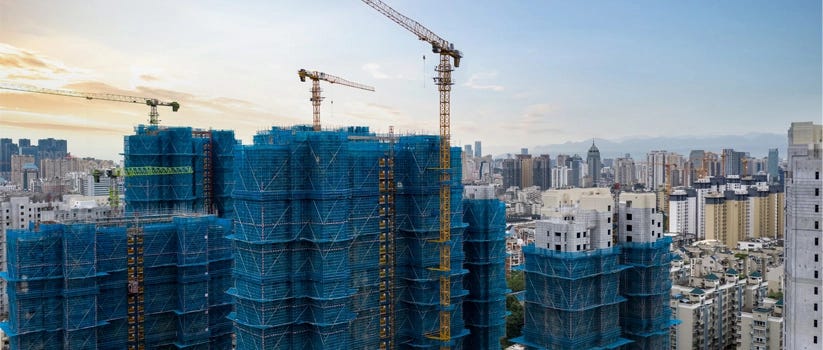
So China did something characteristically practical: it built new financing structures for enabling this! And these are actually REALLY interesting:
What are they? In short, LGFVs are legally separate entities that borrow on behalf of local governments. They act as borrowers, landholders, infrastructure developers, and fiscal stand-ins all at once. They sit between public responsibility and financial markets, allowing local governments to raise enormous sums without breaking the formal rules.
In practice, they’re just a way for local governments to borrow when the official channels won’t let them.
Ah, but why not just engage in municipal bonds, the way we do in the West? These are basically the same things, right?
Well, no, not at all! In the US, cities and states can issue muni bonds openly, directly, and legally. Importantly, voters can see the borrowing, the budgets, the debt ceilings, and the repayment plans. The government itself is the borrower.
China does not allow this!
But there’s another reason too. When China experimented with decentralised financing in the 1980s and 1990s, local governments “borrowed” egregiously. Like, way more than Beijing was comfortable with. In fact it turns out that, when left to their own devices, provinces would have created thousands of independent debt piles, duplicated projects, hidden liabilities, and turned China’s fiscal system into a chaotic shit show that the government eventually had to bail out.
So Beijing imposed strict rules: local governments cannot borrow directly, cannot run formal deficits, and cannot issue muni-style bonds at anything like Western scale.
But, there is also a contradiction: China still expects local governments to build everything! Roads, metros, water systems, industrial parks, social housing, entirely new districts. And yes, all of this costs money.
Which led to: you definitely can’t borrow as a government… but you definitely still need to borrow as a government.
LGFVs are the workaround that solves this contradiction. They let local governments raise huge sums without technically breaking the national rules designed to prevent fiscal absurdity, and without giving local officials free rein to load the country up with uncontrolled debt.
So instead of borrowing directly, these LGFVs (which are technically commercial companies) issue the debt instead of the government.
This does three things:
It avoids breaking those national rules that ban local-government bonds
It keeps the debt off the official government balance sheet, even though everyone knows what’s going on ( you know how I feel about off-balance sheet financing!!!)
It moves the risk onto a company, not the government itself, which gives Beijing more control over who gets rescued and who doesn’t.
So where a municipal bond might say, “We are borrowing money, and here are the terms.”, an LGFV bond says, “Our company is borrowing money, but you and I both know who stands behind it.”
And… it works.
This is how China has managed to build the largest infrastructure expansion in human history! Not through dramatic “stimulus” packages à la the Fed, but through lending innovation.
Or, simply: when the local government balance sheet became politically restricted, the system simply built another.
The Point-And-Shoot Model
To really understand how China moves money, you gotta let go of that pesky Western instinct that everything is coordinated through prices.
In the United States and Europe, central banks adjust interest rates and wait for markets to interpret those changes (by which I mean, they cut rates and wait for their assets to inflate!). The price of money does the heavy lifting.
China doesn’t run a system where interest rates do the steering. Instead, it decides where money should go and how much should flow there. Credit moves through specific channels the government manages directly.
But this doesn’t make it “socialist” in the way Westerners normally use the word. I mean, China still has markets, competition, private companies, foreign investors, and profit motives. Prices exist and firms still make decisions. People decide to buy and sell homes and stocks when it’s opportune. So it’s definitely not a command economy.
What is different, though, is that the state reserves the right to guide the financial system when it matters!
So, in theory:
The West: prices lead, and the government reacts
In China: the government leads, and prices react.
It’s not pure socialism, and it’s definitely not pure capitalism. In fact, it’s a hybrid, also called a state-directed market economy where the government shapes the big flows, and the market fills in the details underneath.
Where the Fed fixes the price of money with precision (via interest rates), the PBoC acts more like a traffic controller, deciding which lanes open, which close, and which need a surge of flow to keep the system balanced.
Again, this is why economists talk about “pipes” in central banking. In China, the government designs and controls these mechanisms. And when you focus on how the money actually moves, not just what things cost, the economy becomes far more predictable!
Here are the main levers in that system.
1. Window Guidance
This is one of China’s most powerful tools, and also one of its most misunderstood (mostly because it doesn’t have a Western equivalent). There’s no formal voting, no published statements, no interest-rate adjustment announced in the way that Western central banks offer “guidance”.
Instead, the PBoC and financial regulators discreetly tell banks what the national priorities are. And banks respond by directing capital accordingly..
This can mean:
Lend more to high-tech manufacturing.
Dial back loans to property developers.
Support small businesses this quarter.
Reduce exposure to heavily indebted regions.
This direction is why the PBoC can change the speed and direction of credit far more quickly than Western central banks can.
2. Relending and Rediscounting Facilities
If window guidance sets the priorities, relending facilities provide the money to make those priorities real. These are targeted credit lines the PBoC issues to banks or specific institutions for particular sectors (e.g. agriculture, renewable energy, small enterprises, strategically important industries).
In the West, central banks influence credit conditions broadly: lower interest rates that will let the market decide how to use that cheap money. But China does the opposite. It uses relending to pre-assign liquidity to certain activities. It’s not “let’s see where the market chooses to invest”; it’s “we want money to go here, and here is the money assigned for exactly that purpose.”
This means the PBoC can expand credit in specific areas even while tightening it in others; a level of precision that Western monetary frameworks simply can’t do.
3. The Reserve Requirement Ratio (RRR)
In the West, the interest rate is the central bank’s main steering wheel. But in China, one of the biggest steering wheels is the RRR: the amount of cash banks are required to hold instead of lending.
When the PBoC cuts the RRR (the amount of cash it’s required to maintain in its safes), it instantly releases hundreds of billions of yuan into the banking system. That liquidity doesn’t sit idle; it goes straight into lending capacity. And because banks are state-aligned, the PBoC can then tell them where that new lending should be directed. It’s one of the most immediate tools China has, and one of the most powerful.
In Western economies, cutting interest rates is throwing a dart at the board blindfolded, and hoping it gets somewhere near the bullseye. In China, cutting the RRR is walking up to the board and putting the dart in the center yourself.
4. FX Management
Alright. Here’s a juicy one!
China’s approach to the renminbi is another perfect example of the point-and-shoot strategy. In Western economies, exchange rates are treated as prices that are produced by global markets. Central banks may intervene occasionally, but they mostly let the currency “find its level.”
The dollar strengthens? Good. It weakens? Tough luck.
China does not do this!
However, China also doesn’t simply “defend” the RMB in the way some critics scream about. Instead, the PBoC manages flows, not prices. (You should be starting to see a theme here…)
It shapes how much money leaves or enters the country by working through state-owned banks, state-owned enterprises, administrative quotas, and forward-operation tools. So when the RMB weakens, state banks step in to buy it. When capital outflow risks rise, regulators adjust quotas or tighten the ability of firms to transfer funds abroad. When exporters are holding too many dollars, the PBoC encourages conversion.
In this system, the exchange rate isn’t just set by the market. It works more like a filter: some money flows are allowed through, others are slowed or blocked. The rules are adjusted constantly to stop global shocks from spilling into China’s domestic economy.
This is why China can experience external volatility yet magically maintain internal stability. The system is literally built to absorb this kind of pressure.
If you want an even simpler way to visualise the difference, imagine two houses with two very different heating systems.
In the United States, the Fed works like a thermostat in the hallway. It sets a single temperature (the interest rate!) and then the entire house adjusts around that number. Some rooms warm up quickly, some slowly, and like my house, some not at all.
China doesn’t use a hallway thermostat. China uses heaters in every individual room.
The PBoC decides directly which rooms should be warmer, which should cool down, and which need special attention. It can turn the heat up in manufacturing, dial it down in property, add a boost to small businesses, or cut off financing to sectors it wants to shrink. And if one heater breaks or overheats? It simply installs a new one or reroutes power to another room.
The goal in China isn’t to let the house find its own equilibrium through trial and error. The goal is to make sure every room reaches the temperature the planners want… Quickly, precisely, and with as little wasted energy as possible.
Oh So Predictable
Once you understand China’s financial pipes or channels, instead of trying to comprehend prices, you can begin to see how policy responses become almost predictable!
China looks chaotic only if you’re watching the wrong things (like the stuff you’d watch in the US: the speeches, the headlines, the interest-rate tweaks). But if you track the flow paths of money, you can see where pressure builds, and therefore where the state is likely to intervene.
Take the property sector.
When activity slows, it’s never a mystery what comes next: the PBoC often channels funding through tools like PSL (Pledged Supplementary Lending) to the China Development Bank, and then lowers mortgage-rates to support homebuyers, opens temporary liquidity windows for developers, and uses FX tools to prevent any panic from spilling out into the currency.
These aren’t surprises, they’re the standard playbook for stabilising the system’s largest single asset class!
The same logic applies when local governments come under strain.
Because these regional hooligans borrow heavily through LGFVs, any stress there triggers a predictable set of responses: bond-swap programmes to extend maturities to buy time, discreet lending from regional banks, and a brief period of tolerance for shadow channels so money can reach where it needs to go immediately.
From the outside, this looks improvised and chaotic (and usually because the government is making totally bizarre and nonsensical, contradictory statements at the same time! Remember: ignore these statements!).
Deflation risks follow a similar pattern. If economic activity slows too sharply, the PBoC doesn’t wait for markets to fix it. It sends targeted relending to key sectors, pushes small-business financing through state banks, accelerates infrastructure projects via policy banks, and keeps the credit ‘temperature’ high enough to avoid a downward spiral.
Again: not chaotic! Just the rules of the system doing what they’re designed to do.
A System Built for Surge Capacity
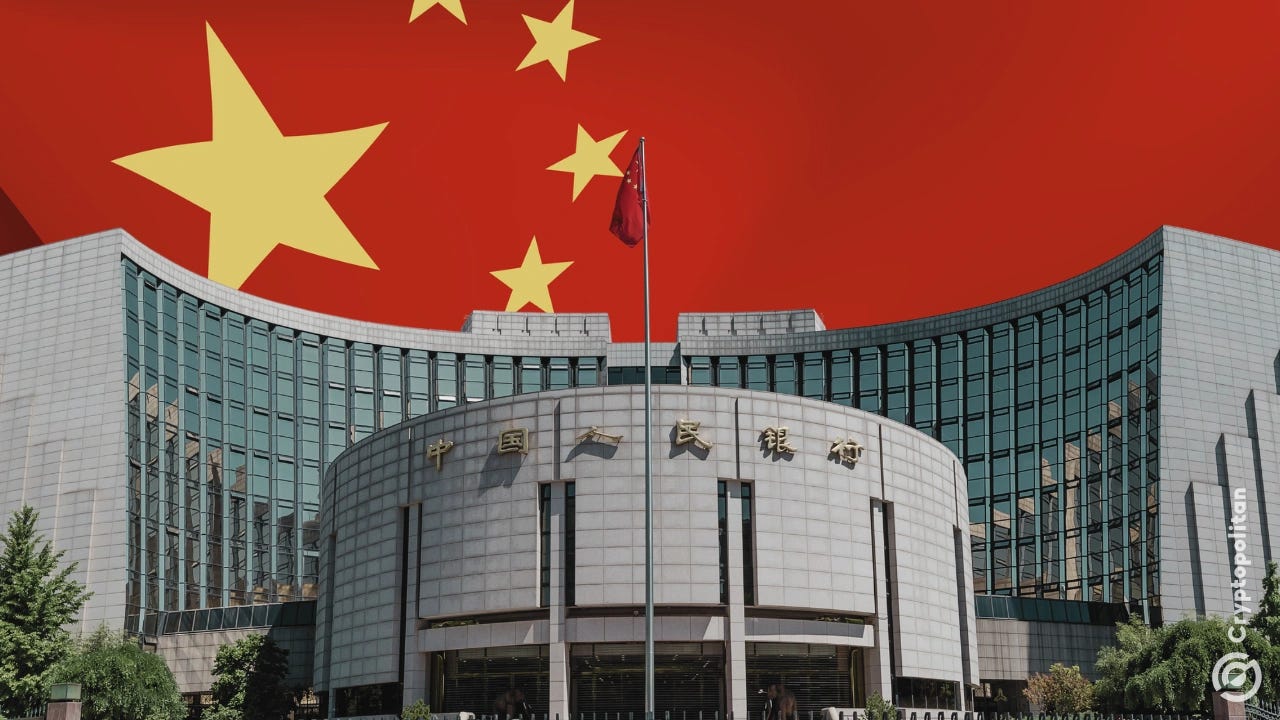
As is probably pretty clear by now, China’s system has been engineered, piece by piece, to deliver speed, scale, and coordination.
When the state decides something needs to happen (e.g. infrastructure), capital can be mobilised almost immediately. It’s also built to absorb shocks by rerouting credit rather than letting failures spread, and to operate at a scale of financing the West can’t match on demand (e.g. entire cities, grids, and whole industries).
Further, at the centre of this design is employment stability, because social stability is the real macro variable. Most importantly, the system is engineered to prevent disorder! Stress is definitely allowed, but contagion? No. Absolutely not.
Just as important as what China’s system was built to do is what it was deliberately not built to do.
It wasn’t designed to maximise efficiency in the Western sense, or to squeeze out the highest financial returns. It wasn’t designed to deliver perfectly transparent pricing either (because prices often follow policy, not the other way around!). And it was never meant to let markets self-correct on their own. Sure, China uses markets, but it doesn’t hand them the steering wheel in the idiotic way we’ve done in the West.
This is why Western analysts often mistake design features for bugs!
China’s system is not elegant in the way a clean market model might be. It is hyper-functional, and deliberately over-built for crisis response. It has redundancies, backup channels, rerouting mechanisms, and administrative levers that allow the state to keep liquidity flowing even when parts of the system break down.
I’m amazed if anybody makes it this far!
To recap: Part One explained what the PBoC actually does, and this piece explained how money actually moves through the financial system. Thus, the final step is to understand what happens when things go sideways!
And in China, that systemic pressure shows up in three big areas as I’ve mentioned:
Property,
Local government debt,
Currency.
These are the areas where finance turns into politics, and the PBoC and the CCP become intimately intertwined.
So in the next part, I want to map each of these pressure points to look at how the system manages them.
And quite literally: once you understand these pressure points, you understand the entire logic of China’s macro playbook! (So yeah, it’s really not that complicated!).
Thanks! Excellent and comprehensive description of a system central to PRC functioning.