


Hi again, and I’m back with a new and unplanned addition to my China central banking series! (You can blame long-haul flights for facilitating the expansion of this incredibly exciting (ha) mini-series…)
If you recall:
Part One: What does the People’s Bank of China do?
Part Two: What tools does it have to do this?
Part Three: What does the People’s Bank of China do if/when the Chinese economy collapses?
Part Four: How do the US, European and Chinese economies actually collapse?
After the last part, a fantastic reader (Andreas) asked an also fantastic question! He pointed out that in my analysis of China’s crisis management, several patterns kept reappearing:
Administrative coordination
Rapid response time
Centralized control over key levers
Distinctive capacity for managed failure
And so, his question:
Is this level of systemic coordination only possible in an authoritarian system? Or is there a democratic configuration that could achieve similar resilience without sacrificing political values?

In other words, he wasn’t asking about interest rates or credit channels but about governance. Then his question went further. From the series so far, he noted correctly that China is able to:
Absorb economic pressure
Reroute crises away from vulnerable points
Prevent financial contagion
Regulate destabilising flows with unusual precision
Thus his deeper, more structural question is:
Are there political–economic systems that can perform this kind of pressure absorption without relying on centralized (un-democratic) authority?
That naturally led him to compare China with the European Union and the US, before he reached the hardest question of all.
(It is also a question that moves this conversation from economics and monetary policy (i.e. central banks) into political theory and institutional engineering and system-level design!):
How do you design a system that can transition without destabilizing?
How does a political economy evolve without collapsing its own architecture?
What principles allow for non-chaotic transitions?
And how do you maintain legitimacy while intervening in the way the PBoC does?
These are, in fact, the core questions of state capacity! They are also the core questions of my own research around designing institutions capable of steering complex economies!
So in this article, I want to discuss the architecture of the political economy in China, Europe and the US, and why they function the way they do. Because while China is nearly always compared to Europe, and the US on ideological terms, I want to flip the narrative and compare it on structural terms! By:
Examining the institutional foundations of resilience: state capacity, coordination mechanisms, legal frameworks, and competition.
Introducing the concept of transition stability, which is the real differentiator between these systems.
Showing why resilience is not a regime trait (“authoritarian vs democratic”), but a design question.
Connect China’s crisis management to broader questions of institutional adaptation, legitimacy, and power.
So instead of just asking how China moves money or how China manages crises, now I want to discuss:
Can China govern transitions when other systems cannot? In what ways is Europe somewhat capable of transitions? And why can the United States not?
Stability Is Easy. Transition Stability Is Hard.
One of the most important things Andreas’s question forces us to question openly is whether any political–economic system can appear stable in equilibrium. Why? Because stability, taken at just face value, is often just the natural flow of a system that has not yet been disturbed; it is not proof of competence in any domain, but of mere existence!
This is something we should care about for the simple reason that equilibrium stability tells you next to nothing about the adaptive capacity of an entity, or about what a system can do if the environment changes, the constraints tighten up, or the underlying assumptions stop holding.
You can think of it the same way you’d think about dating someone!
A relationship can feel perfectly stable when everything is easy and nothing significant is being asked of either partner (e.g. the honeymoon phase!). Because most relationships look “stable” and dizzyingly happy in equilibrium. However, he real test comes when something changes. Consider the couples that break up when a job is lost, someone falls into unbreakable depression, or one partner grows faster or slower than the other, etc.
That is the moment you discover whether the relationship has the tools or the ability to adapt. Before this period, “success” is often just conflated with “untested”!
Political economies work in exactly the same way, in that they can look functional and predictable during calm conditions, but this tells us next to nothing about how they will behave when they are forced into transition. Hence, the difference between stability and adaptive capacity is the same difference between something that is easy and something that is resilient, in countries and in relationships alike.
In complexity theory, this distinction between untested and resilient is foundational. A system can be robust (stable under normal conditions) yet also utterly brittle (unable to adjust when conditions change). It can also appear to be orderly, while also being incapable of self-correction. Seen through this lens, the real test of a political economy is not whether it holds still, which tells us very little, but whether it can change course without breaking. And just like relationships, transitions expose the underlying architecture of that system: the dynamics of power, information, and coordination.
When it comes to economies, you see, surviving a crisis is one thing, but what we ultimately care about long term is whether the economy is capable of restructuring the fundamentals that produced the aforementioned crisis, which is something else entirely.
Or in relationship terms: you are guaranteed to fight (no couple doesn’t!), but long-term success is dependent on whether or not you can repair the relationship after the inevitable rupture!
And this is precisely where China, Europe, and the United States diverge.
China can stabilize itself with an almost unsettling speed. People assume that this is because of its authoritarian style, but actually it’s because its institutions are designed for directed adaptation. So when the Chinese system needs to readjust, it can turn around like a speedboat. Similarly, when it needs to suppress contagion, it stops the spread instantly. Or when it needs to reallocate credit or shut down a sector, it does so with immediacy.
Europe governs transitions through deliberate negotiation: a coordination-heavy model that relies on high legitimacy and cooperation, with heavy institutional weight to it (because Europe loves a good institution), and what I shall call technocratic mediation (I am restraining myself here…). It is slow, obviously, but… It rarely loses control. In comparison, Europe turns itself around like an oil tanker that costly and slow to turn, but which is very difficult to sink.
And then there’s the United States which does something altogether different and a bit crazier. It grows dynamically and does cool things like inventing new equilibria constantly through competition and decentralized autonomy, but… its system really struggles with coordinated transitions. Change occurs, but usually through rupture (e.g. through crisis, improvisation, and institutional shock) rather than through a cooly-decided and pre-emptive adjustment.
And this gives us a very important insight about structural comparisons:
Stability is not the meaningful metric we should care about. Transition stability is!
Hence, the real question is not whether a system can remain intact under normal conditions, which is a distraction at best, but whether it can move into a new equilibrium without triggering total chaos by way of internal fracture, political breakdowns, institutional paralyses, or uncontrolled cascade effects. I.e. without shit hitting fans in supremely bad ways.
T is for Transition
But before I go any further, I wanna outline what I mean by a “transition.”
A transition is a moment during which a political–economic system must shift its entire underlying model, which happens most often when the status quo stops working and the system has to reconfigure itself structurally.
It is not just a little tweak of interest rates or a small adjustments of budgets (cough, Rachel Reeves, today); a transition is closer to issuing the millionth bailout or releasing a new directional policy paper.
Further, a transition is what happens when an industrial model becomes obsolete, or a demographic shift becomes unworkable for the setup of the economy (too many boomers!), or a geopolitical environment tears in half, or a financial imbalance can no longer be rolled over to the next generation, or a technological frontier forces labor markets to disappear, or a… (insert summary of today’s macro climate).
Thus, a system in transition is going through the act of rebuilding the very theory that used to hold an economy together.
One concrete example was the shift from a manufacturing-led economy to a high-tech, services-led economy in the US, circa 1970s and 80s (with deindustrialization, regional collapse and long-term wage stagnation all happening at the same time).
Contrast this with China’s transition from export-led growth to domestic consumption (which was done by redirecting credit and forcing local governments to absorb shocks, while tightly controlling capital to prevent unemployment spikes by any and all means).
And in Europe, the attempted transition to decarbonization and energy independence is another good example. (Ugh: slow, negotiated, heavily cushioned by social policy, etc).
So when I talk about “transition stability,” I am talking about a system’s ability to, in this order:
Recognize that its old equilibrium is gone,
Accept the political pain of restructuring,
Reallocate resources and power (tricky!),
Maintain legitimacy while doing so (even trickier!),
… All while avoiding the catastrophic spirals that occur when systems resist change until it is too late.
So this is what a “good” transition looks like. It’s never going to be painless or simple, but it could be non-destructive. (Again, a useful analogy is breaking up with your long-term partner!).
The question therefore that Andreas is circling is whether any system can truly achieve this?
I mean, transitions are uniquely difficult because they force systems to turn inward on themselves. They become their own monsters. Self-cannabilizing demons. They push against entrenched coalitions, outdated institutional arrangements, and governance philosophies that were built for a previous era.
And think of how they typically play out:
Uncertainty is created → expectations are destabilized → coordination is difficult and often fails→ leading to a loss of legitimacy → leading to disorder → which tests resiliency in the system → without resilience, the system breaks down.
Of course, I didn’t need to explain this to you, we’ve all been watching Fox News over the last few years.
Philosophically, we can therefore see that transitions are where a system must confront the gap between what it is and what it must become! Just like with humans, this is where political economies reveal their deepest limits. And is also why transition stability is the hardest problem in political economy, because it is where theory, power, legitimacy, and institutional design collide.
Transitions are not just shit shows, they are complex shit shows!
Why Transition Stability Is Rare
Now is a good time to get into a little more detail about what actually happens during a transition, such that we can figure out how different systems handle them!
So: the moment a system must move from one equilibrium to another, it encounters three forms of resistance that almost no architecture is fully designed to manage, even if each political economy manages them differently.
One: transitions create winners and losers.
Any major shift that I have outlined already (e.g. industrial, demographic, technological, fiscal) inevitably threatens someone’s position. Groups that benefited from the old model will fight to preserve it, just as groups that were disadvantaged under the old model will be delighted for change, even if they don’t know what it will bring. And so the very institutions built around the previous equilibrium (regulatory agencies, fiscal systems, labour markets, even cultural norms) will often end up defending the status quo by default. This is why the college shenanigans in the US are so damn complex. And this is also why China pushes through transitions with administrative force, while Europe negotiates them through extremely long processes of compensation and “social dialogue”, and the United States often fails to act at all until a crisis makes inaction impossible.
Two: transitions require an exceptional degree of coordination.
To move the trajectory of an entire system, there’s a long list of things that also need to move: fiscal policy, monetary tools, regulatory design, industrial strategy, political will, social expectations, informational signals, and on and on. And they all have to move in some kind of alignment, right? As we saw during Covid, that is extremely rare! China manages it through centralized authority (lock everybody up); Europe manages it slowly, through technocratic frameworks and multilateral decision-making (which took too long to slow the spread); the United States, with its fragmented governance and multiple veto points, has almost no mechanism for aligning its many levers until it is too late (hence people were still in nightclubs well into the pandemic).
Three: transitions involve a (temporary?) increase in disorder.
Transitions are not linear processes. They fuck with our minds and expectations. They introduce noise into the system, unsettle coalitions, and create periods of peak uncertainty that can last indefinitely as the future stops feeling predictable. The political philosopher Isaiah Berlin wrote that freedom is most destabilizing at the moment it is exercised. Well, transitions behave the same way. And because democracies depend so heavily on legitimacy, democracies also tend to avoid these periods of instability until they are forced into them by external pressure or internal breakdown.
This combination of distributional conflict, the need for coordination, and the inevitability of disorder explains why the ability to maneuver transitions with stability is so rare, and why different systems handle it so differently.
How Different Systems Handle Transitions
If transitions expose the underlying architecture of a political economy, then how a system manages a transition tells you almost everything about how it is built!
China, Europe, and the United States each have distinct methods, shaped by aspects like institutional design, political culture, and structural constraints. And of course, each method produces its own strengths and weaknesses.
China: Coercive Coordination
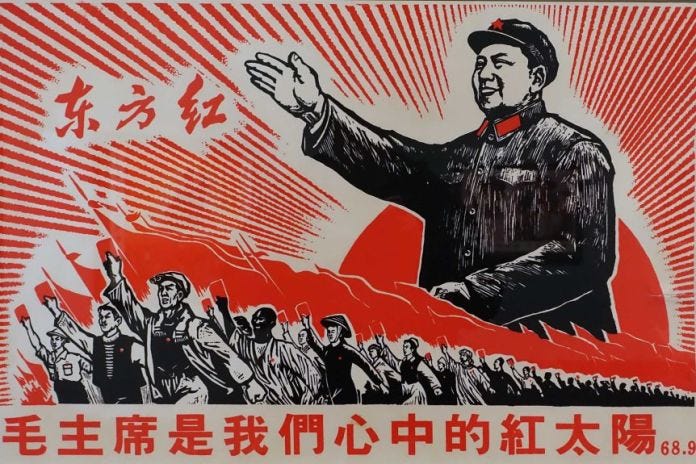
China handles transitions through an approach that can best be described as, uh… coercive coordination. As is probably obvious, authority in China is highly concentrated at a single point (the CCP) which can issue rules that move rapidly through ministries, banks, provincial governments, and state-owned enterprises. Administrative compliance is not optional (and even the thought of this non-compliance is lol). As I’ve written already, this is what gives the state control over credit allocation, as well as the ability to simultaneously adjust the economy across so many institutions.
This model has an obvious advantage, in that China can force transitions quickly! We saw this with Evergrande. It can shut down or reshape entire sectors by redirecting capital, suppressing contagion, and absorbing shocks with a level of immediacy most countries will never match. And this is a phenomenal achievement.
But… The costs are equally obvious. Think about the Covid lockdown. Plus, we see that coercive coordination can lead to over-correction when the Party misjudges a situation, as well as hidden debt when lower parts of the government mask financial problems (especially since so much spending is off-balance sheet!). More issues include institutional brittleness when dissenting information is silenced, and even demographic or social risks when short-term stability repeatedly takes priority over long-term reform (one-child policy, anyone?). Dan Wang’s new book does a pretty decent job at summarizing all of this in a few hundred pages.
Europe: Consensus-Based Coordination
Anybody who’s dealt with the EU knows that Europe approaches transitions through consensus-based coordination, which is a major frustration in the EU, as change happens through tiring negotiations among member states, within domestic political coalitions, across supranational institutions, and any other places that people can find to delay decision-making. Here, “compensation” is a main tool: those who “lose” from transitions are effectively cushioned through welfare states, subsidies, or regulatory protections. (Unfortunately, in the age of innovation, this also means that European industry gets protection over competitive new entrants!). Plus, technocratic oversight is huuuuge (via the European Commission, ECB, ESM, and other bodies) which gives structure and predictability but also feels suffocating. And treaty-based incrementalism ensures that change is sequenced and deliberative (by which I actually mean: never innovative).
This produces high legitimacy and low volatility, meaning that Europe does not panic easily, and nor does it allow crises to spiral. Its social contract is explicitly designed to contain the political fallout of transition.
But the trade-off as we’re all too aware is that of speed — or a lack ok. Europe moves painfully slowly; often too slowly for technological, geopolitical, or demographic shocks. Consensus is stabilizing, yes, but it is also a brake that slows down adaptation to a speed well below the pace demanded by external pressures.

United States: Market-Led Chaos
In comparison, the US is really just fucking around and finding out (FAFO). It transitions through what can only be described as market-led chaos. Instead of a coordinating center, the US has a fragmented political structure with competing authorities, multiple veto points, and powerful private actors who often shape transitions more than public institutions ever will (hi, Elon!). In fact, reform historically only happens only when the old equilibrium collapses entirely! When political stalemate becomes intolerable, when markets force action, or when crisis shocks the system into improvisation.
This model has a real strength: it produces remarkable innovation and creativity. The US is extraordinarily good at generating new sectors, new equilibria, and new economic frontiers, largely because it does not try to coordinate them.
But as a transition model, oh my god it is deeply fragile. In the US, transitions often take the form of:
Collapse → improvisation → partial recovery
… with enormous social and political costs in between. There is no mechanism to align institutions ahead of a transition, so the system re-equilibrates only after suffering significant damage.

So… What Makes a System Transition-Stable?
If we step back for a moment and think about political economies the way complexity theorists think about ecosystems or engineered systems (i.e. the way I do), one thing becomes immediately obvious:
Systems fail at transition for structural reasons, not moral ones!
They fail because their architecture doesn’t support the coordination, flexibility, or information flow required when the environment changes.
In complexity theory, a system that can survive transitions (i.e. move from one equilibrium to another without collapse) must possess a certain set of structural features. However, no real-world economy has all of them (and arguably no real-world democracy could), but… Laying them out briefly helps us see what “transition stability” would actually require.
I’ll list them quickly, because understanding them makes it clear why China, Europe, and the US transition the way they do (and also what each would have to change to transition better in the future!)
1. Slack
In complex systems, slack is needed to absorb shocks. Without slack, stress propagates instantly through the system, wrecking havoc. China has buffers in state-owned banks and administrative controls, and Europe has buffers in welfare systems and automatic monetary stabilizers. The US, which is optimized for efficiency rather than resilience, has very little slack at all.
Thus, a transition-stable system needs built-in excess capacity (not to waste resources, but to absorb stress).
2. Coordination Mechanisms
As I mentioned, complex transitions require multi-layer synchronization. You cannot turn fiscal, monetary, regulatory, and industrial levers independently and hope the system self-corrects. China coordinates through a unified political center, whereas Europe coordinates through its endless supranational institutions (slowly but supposedly coherently). And… drumroll… the US has no equivalent coordinating authority.
Thus, a transition-stable system needs a mechanism (not necessarily an authoritarian one, but a functionally strong one) that can align actors when it matters.
3. Distributional Management
Transitions create losers, and in complex systems unmanaged losses create baaad feedback loops. (Like, uh, ending up with Trump as President…).
Europe compensates losers formally through welfare, and China absorbs losses through state balance sheets and forced compliance. The US largely leaves distributional fallout to “The Markets”, which is to say it doesn’t compensate losers at all, of course resulting in an amplification for losers while rewarding hugely a tiny number of winners.
Thus, a transition-stable system needs a way to cushion losses so that change does not trigger political revolt or social collapse! (please print this and stick it on your wall somewhere!).
4. Long-Term Legitimacy
Complex systems cannot transition if legitimacy collapses. People will not tolerate uncertainty without trust. This is a fact. Europe has legitimacy through social compacts, although they are loosening. China enforces compliance through political authority, which remains strong because of a lack of choice about another system. US legitimacy is… fragmenting under inequality and institutional decay … Anybody checked on Marjorie Taylor Greene recently?
Thus a transition-stable system requires a lot of legitimacy (democratic or otherwise) that allows the system to ask for sacrifice in the first place.
5. Adaptive Institutions
In complexity terms, systems fail when institutions fossilize and cannot update their internal rules. China’s institutions update constantly (sometimes chaotically, but nonetheless they update). Europe updates slowly through treaty reform and regulatory layering (gasp!). But, US institutions are increasingly frozen in design choices made decades ago.
Thus, a transition-stable system must have institutions capable of learning and adjusting.
6. Information Clarity
A system cannot transition effectively if it cannot see itself clearly. In complex models, distorted signals create catastrophic cascades. China’s administrative data (whatever its flaws) creates a unified information picture, even if the West is not allowed to see that picture! Europe’s technocratic diagnostics on the other hand offer high-quality signals (through four million policy papers published annually in lieu of any other progress). And of course, the US suffers from ideological noise, polarized narratives, and inconsistent data (or even fake data, under Trump).
Thus, a transition-stable system requires informational clarity (not propaganda! not politicized noise! but accurate feedback loops).
If you combine these six features, you get (in pure theoretical terms only, of course), the outline of a political economy capable of transitioning without rupturing at the same time.
But of course, no system has all of them, and no system ever will. Thus we live in a world of never-ending economic and political tradeoffs, just to make life more exciting! However, the list itself makes it clear why transitions fail:
The existing architecture does not support the new behavior we are asking for.
And this, fundamentally, is the answer to Andreas’s question.
Drumroll… The Answer to The Question
One main takeaway from this complex question is that:
Economic stability has nothing to do with whether a state is authoritarian or democratic, even if there are hints of that!
That frame is far too blunt to be analytically useful. What determines whether a system can transition smoothly is both simpler and more complex than regime type.
China comes closest to the full complexity set. It has slack through state-owned buffers, strong coordination via a unified political centre, distributional management through state balance sheets, highly adaptive institutions, and relatively high information clarity. Its main weakness is bottom-up legitimacy, which makes its transitions rapid but potentially brittle over time as citizens can tire of feeling controlled.
Europe scores well on legitimacy, fairness, slack, and coordination, while being anchored by strong welfare states and technocratic institutions. It also has good information clarity. But its institutions are only moderately adaptive, and its consensus model slows transitions down so badly that Europe often lags behind technological or geopolitical shocks.
The US has abundant dynamism but… little else: minimal slack, no effective coordination mechanism, weak distributional management, eroding legitimacy, limited institutional adaptiveness, and increasingly distorted information clarity. As a result, it transitions through total rupture, and only after crises force its hand.
And this reframes the picture entirely! China is not resilient because it is “authoritarian”. Europe is not slow because it is “socialist.” The United States is not dynamic because it is… “free”?
The answer to the overarching question is, in fact that:
These systems behave differently because their structural capacities differ: the architecture of slack, coordination, legitimacy, fairness, adaptiveness, and information clarity working (or failing) in distinct combinations. Not according to whether it holds elections or maintains a one-party state!
The (sad) US Case Study
To understand why the US struggles so profoundly with transitions, it helps to remember that its institutions were never designed for adaptation in the first place!
The Madisonian system (named after James Madison, the architect of the US Constitution) was explicitly engineered to slow politics down through checks and balances. Its entire design is built around separating powers, multiplying veto points, and ensuring that no single actor or institution can redirect the system quickly or unilaterally.
The purpose was obviously to prevent rapid change, avoid concentrated power, filter political extremism, and to preserve continuity across generations.
So, in times of equilibrium, this architecture works well. It creates predictability while guarding against executive overreach, and limits the risk of abrupt policy swings. But the very features that make the US stable under normal conditions make it extraordinarily poor at responding when the environment changes. The system can hold a straight line no problem, but what it cannot do is turn.
Transitions require something the American system simply does not provide: coordination, resource centralization, institutional flexibility, and clear strategic direction. Instead, the US political architecture offers the opposite. It outsources strategic direction to the so-called free market (on the assumption that markets will discover the optimal path) and busies itself with fragmented authority, overlapping jurisdictions, entrenched interests, and deep partisan polarization.
Thus, the system is thus designed to prevent steering, not to enable it.
And this problem has been dramatically worsened by fifty years of institutional rot, which is what a lot of my research at MIT concerned itself with!
Since the late 1970s, the collapse of American antitrust enforcement has allowed industries to consolidate into oligopolies that are effectively immune to competitive pressure. Regulatory agencies have been hollowed out through budget cuts and basically just firing the staff. Lobbying power has concentrated to the point that legislators routinely defer to corporate actors on matters of public interest (uh, see here?).

So it turns out that:
Constitutional fragmentation + Institutional decay = Structural inertia
The US cannot coordinate transitions even if it wants to! Inertia isn’t just baked in, it’s now actually reinforced by concentrated private power mixed with degraded regulatory capacity, and a political class that is so structurally and financially dependent on the very industries it is supposed to discipline.
(In complexity language: the system has lost the redundancy and signal clarity that once made it governable).
This is why American fragmentation is so good in a steady state economy but lethal in transition. The historical record is extremely consistent with this thesis: major transformations expose the American system such that it can only adjust under extreme duress, and only through improvisation. Adaptation does occur, but only after the previous equilibrium has already collapsed. Some examples:
World War II mobilization
Cold War industrial and technological buildup
The Great Depression
1970s stagflation and energy crisis
9/11 and the reorganization of the national security state
2008 global financial crisis
COVID-19 pandemic
Supply-chain collapse and global logistics failures (2020–2022)
Unlike China, the United States cannot compel banks, provinces, or firms to reallocate resources in a coordinated fashion. And unlike Europe, it lacks technocratic institutions capable of negotiating orderly, consensual transitions. It relies instead on markets to process shocks (which they do, but only after the old order has failed and only after large segments of society have absorbed the damage).
In this sense, the US sits at the far end of the transition spectrum: not coercive like China, nor consensual like Europe, but fundamentally just reactive. It is stable in equilibrium because it was designed to be, and it is fragile in transition because it was never designed for anything else. (And, you know, the tools it once had to lessen the transition shock are now gone).
Finally…
If Part Four has shown anything, it is that the differences between China, Europe, and the United States have far less to do with regime type and far more to do with system design. Each system manages transitions in its own way, and each pays a structural price for the path it has chosen.
China adapts by restricting autonomy, using centralized coordination to force transitions quickly and contain crises before they cascade.
Europe adapts slowly through democratic coordination, relying on negotiation, legitimacy, and technocratic ballast to manage change in increments rather than shocks.
The US adapts only through crisis, because its fragmented architecture cannot coordinate transitions preemptively; it evolves through rupture rather than through design.
This leads to the central insight of this piece, that:
Stability is not the most meaningful metric. What matters is transition stability, a system’s ability to move from one equilibrium to another without fracturing into shards, becoming paralyzed, or suffering uncontrolled cascade effects. Some systems suppress pressure, while others cushion its inevitability; and some simply absorb the blow from the shock to immediately rebuild afterwards.
In the end, the decisive variable is architectural, such that system design determines how pressure is absorbed and whether the system breaks.
Damn, wasn't expecting to receive such excellent relationship advice in an article on the Chinese central bank 😅 this series was bloody amazing, thank you for sharing ❤️
Thank you so much for the extremely thoughtful response to my question (and the shout-out)! As always, your post is both insightful and a delight to read.
It seems that your assessment is that the US is effectively "stuck" and more so now than it has been in a long time. I certainly don't disagree with that assessment, or with your breakdown of the nature of the challenge, or its causes.
There may be a bit more to consider, though.
1. If a rupture, especially one of exceptional size, is imminent, wouldn't that also imply that rebuilding after the rupture provides opportunity for more foundational restructuring of the architecture itself than usual? (eg. New Deal or Wirtschaftswunder) If so, is sufficient work being done to finish and distribute such structural blueprints? (by which I mean: I'm sure you're on your part of the work, but does a sufficient movement exist to drive support for such reforms when the moment is ripe?)
2. One analogy that can be drawn from the physical sciences w.r.t. stability is a free-energy surface, spanning a multi-dimensional space. You've provided suggestions for six dimensions (with more possible), and one could imagine finding maxima and minima in a seventh to represent unstable and stable equilibria. But if a vector space is both non-linear and abrupt in transitions, that could imply that the analogy should also extend to permit not only smooth compositional transformations along each axis, but also discrete phase transitions corresponding to variations in "resistance" along them. If this analogy holds, the morphology of the resulting structure might be radically altered based on the rate at which the system arrives at its new equilibrium. Is this a consideration in complexity economics?
3. In physics, once such an energy surface has been shown to exist, certain broad conclusions can in cases be reached, even if the full functional form of the surface has not been fully defined. (In math terms, a Riemannian or Lorentzian manifold can be investigated using the variational principle / Noether's theorem to establish laws of conservation over symmetry operations). I understand that we are probably getting onto very thin ice here, as this is perhaps more of an analogy than a formal model, but have any of the forces we're talking about here been interrogated in this way?