


Sinéad here. Another post, fists clenched, shouting at the sky. This time about about how ChatGPT’s new “let me buy everything for you!” model is going to destroy the “we” on the internet, and eventually, the “we” in real life!
TL;DR: Humanity’s last remaining job (being the customer) has just been outsourced to an API. The internet no longer needs us to click, compare, or even want. It can do all of that perfectly well without us.
Congratulations, You’re Obsolete
A few days ago I awoke to frantic messages from my friend Fergal about a ChatGPT product announcement.
Now, I am essentially immune to tech product launches. I don’t live in the world of consumer gadgets; I’m a late adopter of almost everything. I don’t have apps. I barely even do email anymore. If I know anything about consumer technology, it’s from working upstream of it in batteries, semiconductors, etc.
But this one PR had me reading the article twice. Because while I might not use much consumer tech, I do use this thing called… the internet.
OpenAI had announced:
“ChatGPT can now complete purchases directly in chat.”
No need for a browser, or to search for products, or even to go through checkout pages. (Uh, ironically, is this the Amazon no-checkout store of the internet? And if so, the irony that Amazon of all companies did not get there first…)
Now instead, you can just:
Ask ChatGPT → “Here- would you like to buy this?” → Say yes.
Although, in reality we know the first two stages will collapse into one:
ChatGPT suggests “You should buy this!” → Say yes.
I guess some people may call this “technological consumer progress” . But I was surprised by how much I gave a shit about this announcement, and how sad it made me.
Fergal seemed to agree:
“Indeed. The internet, as we know it, is dead.”
Because that small UX tweak, “buy in chat”, is more than just a feature. Not to be too alarmist (and also! I want to be alarmist!) but… Is this the end of the peer-to-peer internet? The last space where humans can still mediate meaning for one another?
For thirty years, the browser was easily democracy’s most successful, even if most controversial, user interface. It forced you to decide what to click, who to trust, and whose affiliate link looked least scammy (back then, they actually all did). It was frictional, chaotic, gloriously human. And no more so than at the beginning innings of the internet.
Consider making an online purchase: You had to read reviews, open tabs, argue endlessly with a Reddit stranger named Resiifent_Address29282 about the product’s battery lifecycle, and spend way too long finding a store close enough to you to buy it.
This process was extremely inefficient because it obviously requires cognitive due diligence. But, each of these crappy websites and moderated internet chatrooms was also the invisible work of culture and community: the small acts of evaluation that make us moral animals!
And now, of course, all of that is going to happen behind the curtain: between agents, APIs, and neural net with weights no one can see, paid for by corporations we don’t understand. We won’t even know why we bought something. And we’ll likely forget that we ever did.
While this ChatGPT product sounds efficient, I have to agree with Fergal: to me, it feels more like a funeral.
And so, welcome to the world of the Agentic Commerce Protocol, where capitalism finally fulfils its dream of not needing customers at all!
Where every purchase is made for you, by you, without you. Where your agency is reduced to a polite confirmation prompt (and even that will soon be optional). Where desire is pre-computed and auto-executed, and we morph into lifeless consumers in a world that no longer needs us to want, only to exist.
The Meaning of Peer-to-Peer
What will die with the rollout of this product isn’t shopping but participation. And worse, this is in a world where participation rarely exists outside of the internet.
In the digital context, peer-to-peer used to mean more than a file-sharing protocol, of course. It was a longstanding moral and cultural architecture: the idea that people, given tools to connect, could produce knowledge and trust together. (Ask anybody fighting the good fight in the open source software (OSS) community!).
The first internet worked much like a messy Hayekian experiment in distributed intelligence. Without a central planner, millions of tiny actors exchanged (very strange) signals, occasionally inventing something beautiful, and experimenting with cat memes.
That system produced entire economies of discernment:
Reviews = consumer protection.
Comment sections = black markets for credibility and filtering.
Blogging = ideas discovery.
It was slow, redundant, error-prone. In fact, it was just like markets, democracy, and other systems that only function when humans are allowed to be inefficient.
“Browsing” in this historical context was a form of digital citizenship. We, the Browserers, were curators, consumers, auditors, and (ever so occasionally!) anarchists, throwing weird shit out into the abyss to see what, if anything, would be returned.
Then came optimization: platform capitalism (ugh) that decided that friction was bad for quarterly growth. Engagement, not discernment, became the key performance indicator of civilization. And this, too, got a new name: “user experience.” But what we really meant was behavioural compliance: designing away the part where you… think.
Because human thinking = volatile, and volatile = bad for quarterly reports.
Alas, this new internet runs on the logic of behaviorism:
Stimulus → Response → Dopamine → Checkout 💰
It’s the B.F. Skinner version of free markets, where behavior is engineered through rewards and stimuli. The psychologist who taught pigeons to peck for pellets would’ve loved this technology if he were still around to see it: perfect in its Pavlovian efficiency. (Just, uh, minus the freedom.)
So when people think: Why does it matter that ChatGPT can now buy things for us?, I think about my conversation with Fergal at 7am. And the feeling that we’re witnessing the end of a slow-at-first-but-then-extremely-fast-motion coup.
Because what is dying here isn’t convenience, but the last small act of resistance: choice itself. The final moment where you could express a preference that hadn’t already been predicted and executive on your behalf, already, for you.
When the peer disappears on the internet, so does the practice of judgement. And without judgement, culture becomes nothing more than economics: a system for allocating attention with no memory of why it even bloody matters.
The Rise and Fall of Human Curation
Curation has always been the quiet infrastructure of civilization; it is the invisible plumbing of meaning and I plan to write about this in significantly more detail soon!
Think briefly back to before algorithms, feeds, and “content,” when culture depended on a priesthood of interpreters: editors, critics, DJs, museum curators, professors. God knows they were not always right, but they performed a vital economic function: filtering abundance into something more coherent. In other words, gatekeeping the enormous amounts of shit that’s created. These interpreters were the market’s price stabilizers, so to speak, for truth and taste.
Then came the web.
Internet 1.0 flattened the hierarchy but, paradoxically, made curation more essential than ever. The sudden democratization of production (and the democratization of just about everything, if you had to read startup pitch decks the way I did back then) led to the creation of millions of homepages, blogs, and reviews. It was, in Hayek’s terms, a glut of dispersed knowledge: too much information scattered across too many minds, and no reliable price system to reconcile it. Markets can translate chaos into order through prices, Hayek opined; likewise perhaps the internet could do exactly this with clicks.
Fast forward, and it appears that clicks were a terrible poor substitute for prices! Because as we now know, not only do clicks not coordinate knowledge, but they also actually overwhelmingly inflate noise.
So yes, someone had to make sense of it all. And the early curators were volunteers: bloggers with niche authority, Amazon reviewers with moral standing (or basically a higher membership function), and forum moderators enforcing the subreddit rules. They were the unpaid civil servants of the digital commons. And, thank god!
This was really the golden age of the internet. One of my friends was part of it as an early restaurant blog curator back when food culture still lived online (and not on the ‘gram). For the first time, chefs could share recipes, techniques, and ideas with one another directly: from a 3* in Paris to a 1* in Cape Town). It was messy, extremely generous of time and care, and gloriously nerdy. Now, of course, the only thing that seems to matter about a restaurant is whether the lighting flatters your TikTok upload.
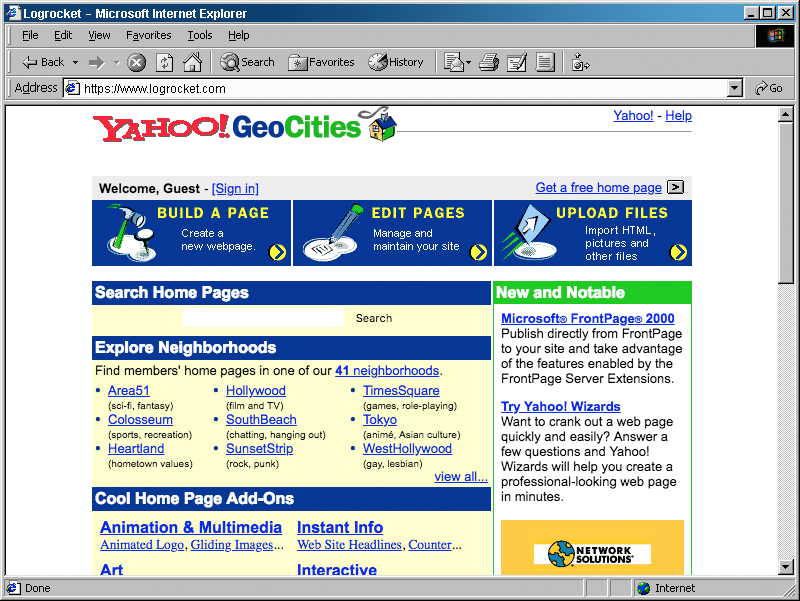
This is what the internet used to look like for old people like me
All of this worked. Briefly. The early web’s distributed curation was messy, sure, but pluralistic. Authority was earned by peers: through attention, upvotes, and by having an edge or being a little bit different. A good blog could out-rank The New York Times, and a playlist could outlive a record label. Yes, it was chaotic, but the chaos was at least recognizably… human. And mirrored our social communities writ large
Then came social media, and with it, the financialization of attention. (double ugh).
Once platforms learned how to monetize engagement, curation mutated and critics all but disappeared. In their place? Yes, here came the influencer, while the editor was replaced by an algorithm.

And in case you haven’t noticed, Influencers are what you get when curation is converted from an act of intelligentsia into a pure market and economic signal. Their function isn’t to filter meaning but to actually enact the heinous crime of amplifying content (or, for us lurkers, amplifying noise). And in doing so, they turn taste into sheer volume. Unsurprisingly, then, the system thus rewards enthusiasm over accuracy.
(If you don’t believe me, look at what any successful influencer has in common with the others: Bonnie Blue, Taylor Swift, Elon Musk, Donald Trump, Charlie Kirk: they flood the zone with 1. Higher volumes of content, and 2. More controversial content. Quantity > quality or credibility).
And, in this social media era which is alas now coming to an end, at least the influencer was still human. Like with most humans, you could love them, hate them, mute them. They were vain, mercenary, occasionally funny, drop dead beautiful. They reminded you that curation, even when corrupted by corporatism and imperfect, was still a somewhat social act.
But now, the machines are taking over.
Editors gave way to influencers; then influencers gave way to algorithms. Judgment became engagement; then engagement became personalization. That’s the third-order effect of the internet: each generation flattens our interactability one layer further.
The “algorithm” first arrived as a helper, promising to organize the mess of our lives and to separate signal from noise, to “surface” what mattered. This sounds good at first glance, even helpful, but consider that algorithms don’t surface meaning; they surface probability. (Because they are, at the end of the day, nothing more than a probabilistic function!) They optimize for what they can measure, and meaning isn’t measurable, least not equally distributed.
If human curators operated in Daniel Kahneman’s System 2 mode (slow, effortful, reflective), the algorithm industrialized System 1 thinking (fast, emotional, and automatic). Its impact on our individual and societal apparatus is becoming clearer by the day: we are learning to become automatic in our triggered instincts instead of thoughtful in our intellects. (Sorry - I have to mention somewhere in this that apparently kids can’t even ready anymore?).
The economist Herbert Simon famously once warned that a wealth of information creates a poverty of attention, and yet still algorithms saved the day by solving that scarcity into monetization.
Your feed didn’t just reflect what you liked; it trained you to like more of the same. I spent significant working on the issue of Freedom of Thought at MIT and Harvard Law School a few years back, trying to understand exactly this problem: how the architecture of information shapes cognition and autonomy. (For anyone interested in the moral implications, I highly recommend the book Freethinking by my collaborator on this topic Dr. Simon McCarthy-Jones, who writes about our way of treating mental privacy as the next frontier of human rights.)
Thus, the recommender system became the invisible hand of the attention economy.
Now, even the influencer looks quaint. At least they possessed ego and motive; you could watch them hustle for relevance. Yes, the algorithm is invisible. But it’s still human-adjacent; after all it’s coded by people and optimized by people (even if it’s accountable to no one).
Anyway, all of that belonged to a previous era.
Now we’re entering something entirely new: the agentic era, where mediation itself is automated and the user quietly disappears.
What comes next will make everything that came before (the chaos, the influencers, the algorithms) look almost… charming. Because what’s coming isn’t just post-social; it’s post-human.
Each technological epoch has stripped away one more layer of mediation:
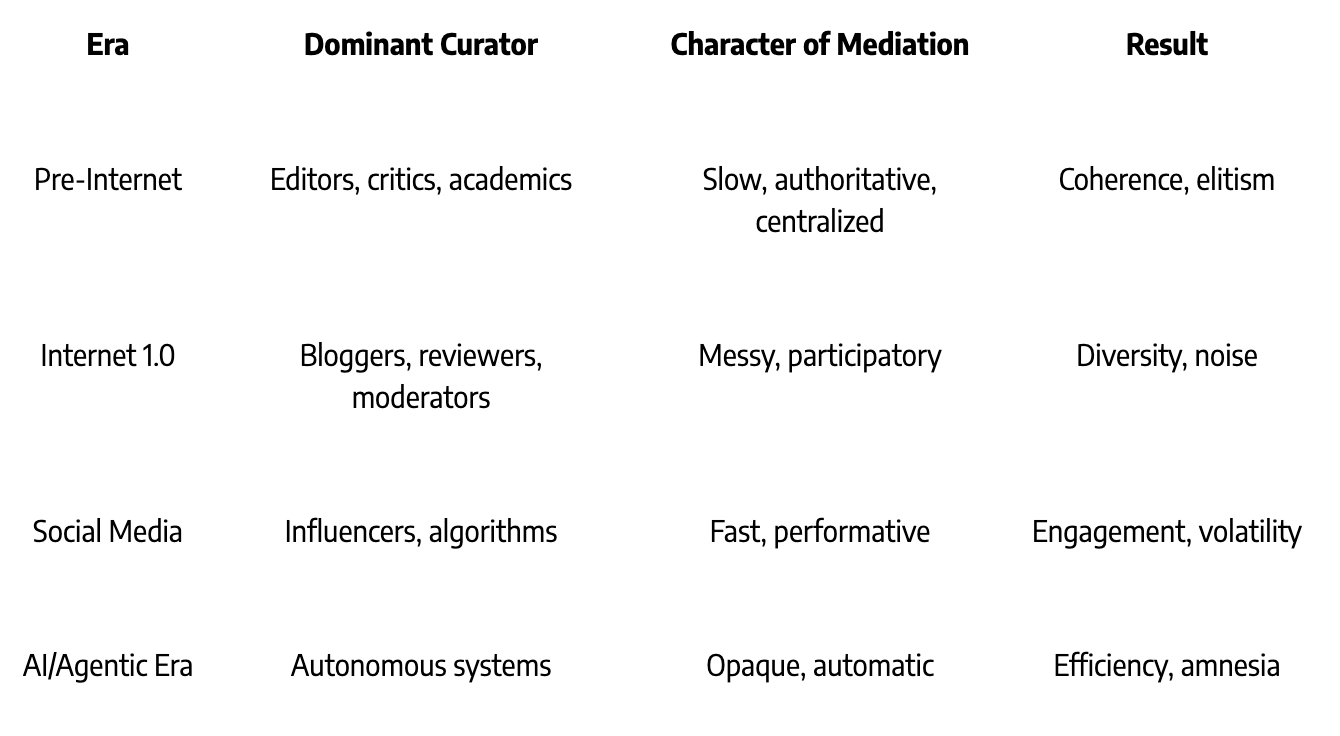
The Age of Agentic Overlords
And so here we are. Welcome to the agentic era, the internet’s post-human phase.
If the influencer killed the critic, and the algorithm killed the influencer, we can see now that the agent will kill the algorithm.
The human, at last, is out of the loop.
For agentic systems (e.g. ChatGPT, AI shoppers, AI journalists, portfolio managers that trade penny stocks while you sleep) do nothing more than another collapse of meaning through the removal of search, recommendation, and transaction by creating a single act on ChatGPT.
You no longer look, compare, or decide. In fact, why bother thinking at all? You just ask, and the system executes. Actually, you don’t even need to ask. The system will just tell you what you should confirm that it should execute.
I’m pretty sure Sam Altman would call this “removing friction.” But in practice, it removes participation, the last remnant of human authorship in the digital world. And as I mentioned before, the digital world is the last of our worlds where we seem to have any human collaboration at all.
Of course, as the internet becomes one dimensional, we humans shall follow suit. No more choice (there are too many choices, anyway), no more curiosity (there’s no time for that, after all), no more hesitation (.
The system does not wait for you to think; it acts.
And what it produces? My god. Shit like this:

A deluge of stuff: content without culture, output without intention, noise without music. Our life’s “feed” is now an overflowing trough (slop, slop, slop); an endless buffet of synthetic and revenue-optimized movies, AI-generated novels, reheated jokes, recycled aesthetics (of beige on beige), half-born ideas, and algorithmically smoothed personalities.
Everything is glossy, weightless, and indistinguishable. Am I in New York or Cape Town? Yes. Am I listening to a podcast or an ad? Also yes. Am I talking to a person or an interface that learned from one? Who can tell anymore.
The signal-to-noise ratio isn’t one in ten thousand anymore, it’s none.
We’ve entered an economy of too muchness. But also, an excess of nothing. A kind of cultural bulimia where production is compulsive and meaning is purged before it even arrives. It’s gross, in both senses of the word: mass and disgust. A planetary surplus of content, all of it optimized for no one and nothing in particular.
This is what it looks like when friction dies and when “democratized creation” becomes reflexive and… free. When human thinking is just another latency issue.
And so everything in our world will be eaten alive by this nothingness: from literature, music, food, style, architecture, to social interactions, feelings, the point of existing at all.
The only thing worth anything in this new world, according to Fergal, will now be natural capital and natural resources. Because, as he said, “even as braindead sheep, we’ll still need to eat.”
Why Give A Shit?
Let’s zoom out quickly.
The story so far can sound like technological progress. As those clever venture capitalists might say: one long march toward efficiency, frictionless exchange, infinite productivity where we can live forever and do everything, while simultaneously nothing.
So at this point, you might reasonably ask: am I just an old man shouting at a cloud? Too sentimental to see that the future is bright, that the kids are fine, that the machines are, in fact, my friends?
Yes, I’m getting older and grumpier, of that there is no doubt. Midday naps are starting to feel more appropriate and I often forget where I put my phone in the first place. But it also might be that something else is happening here…
Because disintermediation isn’t liberation; it’s loss.
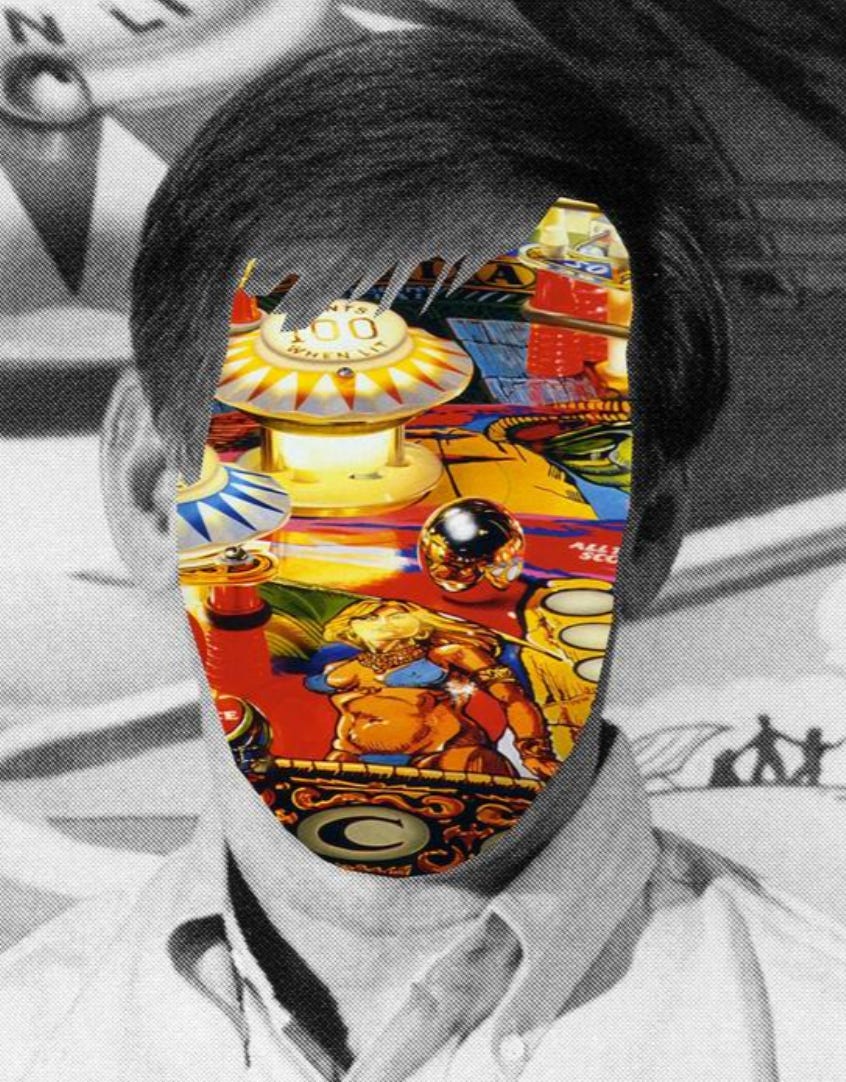
Economists have seen this movie before. When banks disintermediated credit risk in the 2000s through securitization, it didn’t democratize finance. Hint: it detonated it. When news publishers disintermediated editors to chase ad revenue directly through social media, it didn’t make journalism freer; it made it broke and subsequently bankrupt. When gig platforms disintermediated employers, they didn’t empower workers; they subjugated them.
Every layer of mediation we strip away takes a piece of our humanity with it. In three obvious ways:
1. Agency.
Without choosing, we forget how to judge. The act of decision alone (of picking this over that, of saying no) is the gym where the “moral muscles” live. When we outsource judgment to a system, we atrophy and worse, we trade responsibility for convenience. The agent may “know what you want”, but remember: wanting without choosing isn’t desire.
2. Collective Intelligence.
I’m sorry, but we are just becoming unfathomably fucking dumb. Consider that conversation is how a species thinks. The early web, for all its chaos, was a giant group project in understanding. Forums, reviews, comments, etc, forced us to articulate and defend ideas. It was trench warfare. Once that conversation is replaced by algorithmic prediction, we stop learning together. Each of us becomes a sealed simulation, fed a bespoke reality calibrated for engagement and discursions, when they do occur, are with bots.
3. The Commons.
I couldn’t possibly write something economics-adjacent without mentioning The Commons. Shared mediation is what makes culture… shared. When everyone reads different news, watches different feeds, and buys from different invisible storefronts, the idea of “public life” collapses. Oh, the joy of our future parallel solitudes scrolling in synchrony….
So, this is the quiet price of efficiency: the disappearance of the spaces where meaning used to form. Never in our civilization have we not had this shared digital or physical space.
The Enlightenment required editors and salons: places where minds met, clashed, refined one another. Then the twentieth century required publishers, critics, and institutions to intentionally slow information down long enough for thought to happen, and for ideas to form around those thoughts. Now, our digital century needs its own equivalent: curators of meaning who can make sense of abundance without flattening it.
But instead of thoughtfully actually doing this, we outsourced meaning to our machine overlords. And unfortunately our overlords have no ethics, no memory, no taste. They cannot hold ambiguity, only probability. It can tell us what’s likely, never what’s true. (Truth, even conceptually, is something that not even humans have mastered).
This is why the death of mediation is not a technical story but a civilizational one. Which unfortunately came to me in a ChatGPT press release one morning last week.
Like the boiling frog in water, we’re losing the habits that make collective life possible: reflection, judgment, and plurality.
Like the frog in slowly boiling water, we’re losing the habits that make collective life possible: reflection, judgment, and plurality.
And yet, there’s still work to be done.
What comes next must be a new, intentional form of curation. Human Curatorship 3.0? Or something with an equally awful name? Something transparent, accountable, and gloriously slow. Small ecosystems that curate collectively: newsletters, niche media, human editorial networks that build meaning back into the web. Cottage industries. Original ideas. Because AI should remain a tool. Its job is assistive, not authoritative. Right? Am I right?
Maybe there can be a third way. Maybe we don’t need gatekeepers (à la Anna Wintour) or gods (à la Sam Altman). Maybe we need gardeners: people who tend the informational soil, who cultivate coherence and meaning. Curation that is less about top-down power, and more about stewardship, not elitism. As civic duty.
There are some people and organizations in my mind that are already starting to move into this space, and it’s incredibly exciting. Maybe when I have some better formed thoughts on the “solution” (?) or “mitigation” (?) of this issue, I’ll be able to outline it better. For now, the simple act of resistance is to reclaim what the systems have optimized out of us: slowness, uncertainty, and choice.
Because the internet once made us peers. Then came along the algorithms which famously made us products. The curator, however (if we can bear to become one again!), might just save our society in time to make us more… human.
Nice piece! “The signal-to-noise ratio isn’t one in ten thousand anymore, it’s none.” This is my reason why, despite working in tech, I cannot get excited about all new products coming out; the improved text-to-speech and video gen that will allow you to put out even more content. It’s funny how so recently Dario of Anthropic wrote the machines of loving grace essay, and now we have collapsed back into “lets have AI help us buy more, faster”. I like your last paragraphs & hope for more and more local initiatives like that to arise ✨