

Trickle-Down Gastronomy (ii)
Michelin Stars are no longer serving their intended purpose, making them tired and boring. So what is the problem that the next big chef will solve next?

I’m back! And writing Part II slightly later than anticipated, as my return from Japan was chaotic (a fractured back and the flu, at the same time…)
Anyway! If you haven’t read Part I, go do that first. But to briefly recap: I argued that culinary history is not a matter of aesthetic progress driven by genius chefs, but an economic story of crisis and response that is as old as time itself. In short, I reasoned that chefs emerge when something upstream of dining breaks, whether it’s supply chains, labor markets, institutions, meaning, etc; and that the real job of a chef is to diagnose and repair whatever the prevailing economic system has most recently broken about eating.
I ended Part I with a question that the essay had been building toward: if chefs are no longer needed to recover ingredients, guarantee quality, or standardize excellence (i.e. if the old problems of how to feed us to high standards have been substantially resolved), then what human problem is dining supposed to solve now?
Let’s jump in!
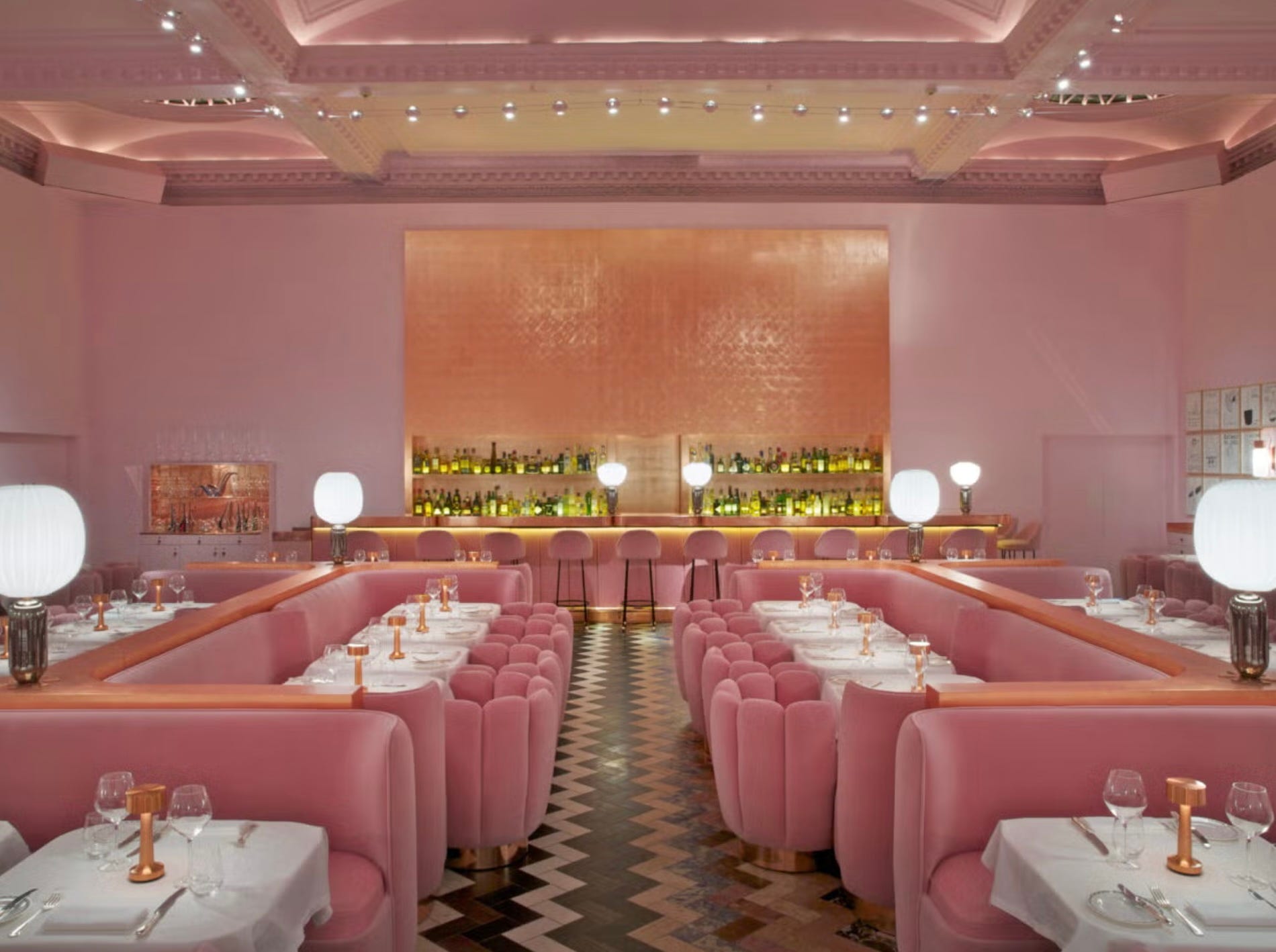
Michelin Stars are Exhausted
The annual Michelin awards were held in Dublin last week, and I got to chat to some of my chef pals in person who were still morbidly hungover a few days after the event. Who got a star, who lost a star, and who kept their stars.
My general sentiment about the whole affair is that the newly awarded Michelin stars are boring, bankrupt of culture, and… honestly? I tried the food of one of this year’s new awardees with a bunch of my pals from culinary school earlier this year, and I didn’t think the food was especially good!
But more on that later. First, let me defend le Michelin for a moment, because it gets dunked on a lot.
An ultra-short history lesson for those not in the know: The Michelin Guide began in 1900 as a marketing pamphlet by the famed tire company. The Michelin brothers printed maps, gas station listings, and hotel recommendations to convince people to drive more and wear out more tires, a surprisingly capitalist move from Europeans. It started awarding stars to restaurants in 1926, and by 1931 it had formalized the three-tier hierarchy that still exists today:
One star = worth a stop;
Two stars = worth a detour;
Three stars = worth a special journey.
All judged by anonymous inspectors evaluating the plate alone. In other words, Michelin was itself born from a structural constraint of “how do you build demand for automobiles?” and evolved into an institutional technology for solving a different one.
And credit where credit is due, this whole Michelin system took a genuinely hard problem of: How do you measure culinary excellence? How do you standardize refinement? How do you reward reproducibility? … and built a system of precision, consistency, and prestige hierarchies that gave fine dining a framework for both chefs and diners. So if you were a serious chef in 1985 or even in 2015, the star system told you what to aim for, and it told diners what to expect. That was genuinely valuable.
But here’s the problem. The very thing Michelin optimizes for, which is consistent technical execution under scarcity, is no longer… scarce.
You can now get good butter anywhere (although I’ve never tasted better butter than in Ireland). Global ingredients are a FedEx delivery away, even if every restaurant under the sun claims to use local produce only. Fermentation knowledge lives on YouTube (I just choose to ignore it). Pastry science is taught in community colleges. Molecular tricks are on TikTok. Sous vide precision costs $80 on Amazon. (Yes, even I can sous vide my own dinner parties! And in fact the challenge now is for top chefs to not sous vide their menu!).
Technique has effectively been democratized, like every other thing in our lives since the early 2010’s. (Remember when we tried to democratize democracy and we got the Arab Spring?) Similarly, precision has been industrialized and ingredient sourcing has been globalized. There’s nothing left to do! Everything that once required a 3-star kitchen to access is now available to you and I. In December, I had my own restaurant pop-up in London, where I served a seven-course, one-star menu with wine pairing. If I can do it, anybody can!
So in this way, Michelin isn’t wrong per se (or should I say Per Se?!). It’s just optimizing for a problem that was already solved a long time ago.
This is the exhaustion that industry insiders and critics are feeling. It’s not that the Michelin system is broken, but that it’s kinda useless now, because the scarcity it was designed to streamline no longer exists.
The New Constraints
So now we get back to my core framework from Part I. If chefs arise when systems break, what has broken today?
Post-internet, post-globalization and especially post-social media, it’s definitely no long supply chains or culinary techniques. In fact, what has broken is the give-a-shittery of life. Or more politely, meaning.
And this no-longer-giving-a-shittery manifests in four specific ways that are worth getting into the weeds about:
Attention Scarcity. Duh. The modern diner (the modern person) is cognitively fucked. Totally, utterly, fucked. Everything is content, everything is photographed, everything competes with a feed or an endless stream of live, updated data. So dining must now justify something extraordinary: three hours of full presence, complete surrender from technology, genuine engagement. That is a much higher bar than “food must be delicious” because delicious is Uber Eats in your pajamas. The question today is whether you can compete with the entire internet for someone’s sustained attention. Most restaurants cannot, and increasingly the ones with the white table clothes in a hushed setting which increasingly feels like a mental asylum for GenZ onwards.
Status Fatigue. In a world where everyone (on an instagram feed, at least) flies business class and posts tasting menus, constant luxury is visible and massified. Status through consumption is way less differentiating than it used to be, and in fact, might now even be considered tacky.
Memory. What is unforgettable, in an era where in a single week we had the US President kidnap a foreign head of state, threaten to take over Greenland’s penguins, and try to steal oil from Venezuelan-turned-Russian oil tankers? You see, we’ve already forgotten about all of these events; a good lobster ravioli dish stands no chance! Taste alone doesn’t anchor our tiny human memories, which is an unfortunate neurological fact. Stories that impact us personally, however, do. On a recent trip to Madrid, I actually chose not to go to the very famous three-starred DiverXO in favor of something way more low-key but relaxed and fun, which was the booziest and most entertaining afternoon I’ve had in years, with many stories that will follow it… And? Zero regrets.
Identity. Look, we can consume anything at any time. But what is increasingly hard is feeling like we belong anywhere. And in a consumption heavy world, alignment and immersion with values, philosophy and narratives is way more valuable. The Southern Californian restaurant that says “we are farm-to-table” is not just describing a supply chain; it’s offering an identity (and yes, we all know the annoying people whose identity is just this). The Scandinavian chef that says “we forage everything within 20 miles” is making a precise post-modern logistical claim: they’re inviting the diner into a small and self-contained worldview to experience something novel. Restaurants like this have shifted from being a product to a participatory system (I wrote a whole book about how Taylor Swift does this with music too. I suppose I should suggest people read that, at some stage!).
So, if Part I showed that chefs have always been solving structural problems, Part II here argues that the current structural problem is existential. Not: how do we eat well? But: why should we eat here, like this, with these people, in this room?
Chefs as Worldbuilders
So the chef’s role mutates again, as it always does.
The chef is no longer primarily a logistics manager (Escoffier), or a rebel (nouvelle cuisine), or a novelty engineer (Adrià). Today, the chef must become something else entirely. And the best word I can find for it, even though it sounds gimmicky, is worldbuilder.
Let me define that properly, because I don’t mean it as consulting-speak.
Today, the restaurant is an ideology, because every part of its ingredients, sourcing, ESG, labor practices, are politics-adjacent decisions. The most interesting restaurants I’ve visited recently are not trying to serve you the best version of a dish you already understand, they’re trying to immerse you in a system of meaning that holds together for two or three hours before it dissolves entirely when you leave. Music does this, and movies do it too.
This means, therefore, that the dining experience is increasingly becoming a theatrical experience. The best restaurants now choreograph silence, control pacing, manipulate expectation, and create an emotional arc. A great tasting menu in 2025 has more in common structurally with a well-paced film than with a traditional dinner service.
And a quick note on this! Whilst in Japan I spent several days with a celebrated movie director, who talked about the hardest project he’s ever done: A short movie that was displayed on a wall so large that the viewer could only see part of the screen at any moment, essentially turning the “movie” into a “photograph” medium. With a movie, he told me, the director is fully in control of timing the narrative; the viewer can only sit there and enjoy (or endure) the arrival of meaning. With a photo, the opposite is true. Control over when and how meaning is generated is entirely out of the hands of the director, and the viewer decides whether or not to look now or later.
This allocation of control is true in restaurants, as well! A tasting menu is a movie, in which the chef sequences the courses, controls the pacing, and decides when the emotional peak arrives (usually with the fourth glass of wine tasting for me). And an à la carte menu is a photograph in which the diner chooses what to look at, in what order, for how long. The best chefs inherently understand this; but it’s immediately clear to the diner when they do not.
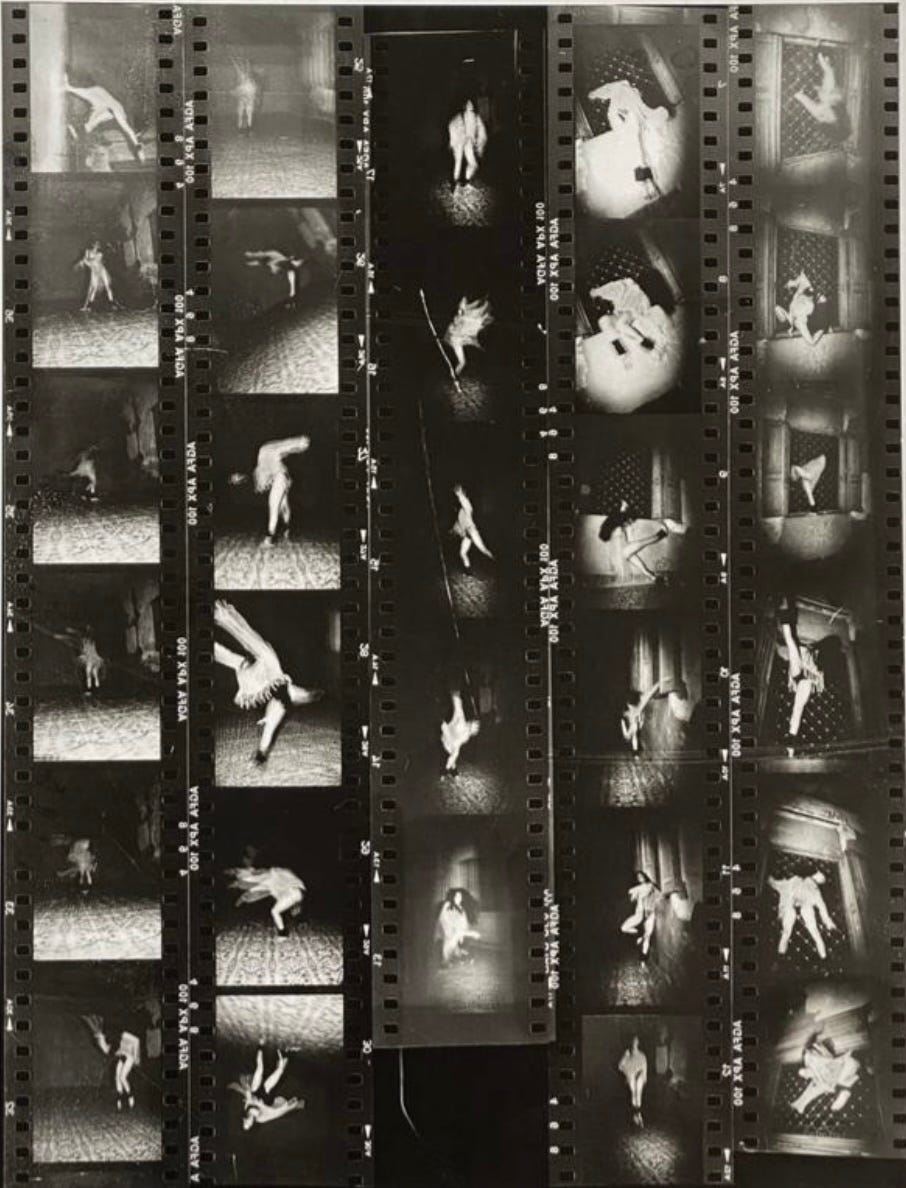
The most interesting restaurants right now are the ones playing with exactly this tension! They are giving you enough structure that the experience has some arc, but enough openness that you feel like a participant rather than a boring, white-clothed dinner audience member. Where a restaurant sits on this spectrum (in terms of the chef’s control, how much the diner is given) turns out to define almost everything about what kind of experience it can create, and what kind of broken thing it can solve. (Here’s a fascinating and funny podcast discussing this somewhat in terms of US and European Michelin restaurants).
There are four super concrete examples of what this looks like in practice that come to mind, and they also give us an idea of why the next wave of great chefs cannot be reduced to a single trend!
Ultraviolet, Paul Pairet’s restaurant in Shanghai, is the most literal version of dining-as-cinema. Ten seats at one table, where every course is synced to controlled projections, scent, and sound; the room itself shifts around you as the meal progresses. Just hope you don’t suffer from vertigo! The chef here is a director in the most precise sense in that the diner relinquishes control entirely and is sequenced through his emotional arc. You cannot check your phone because this would be like checking your texts during a movie.
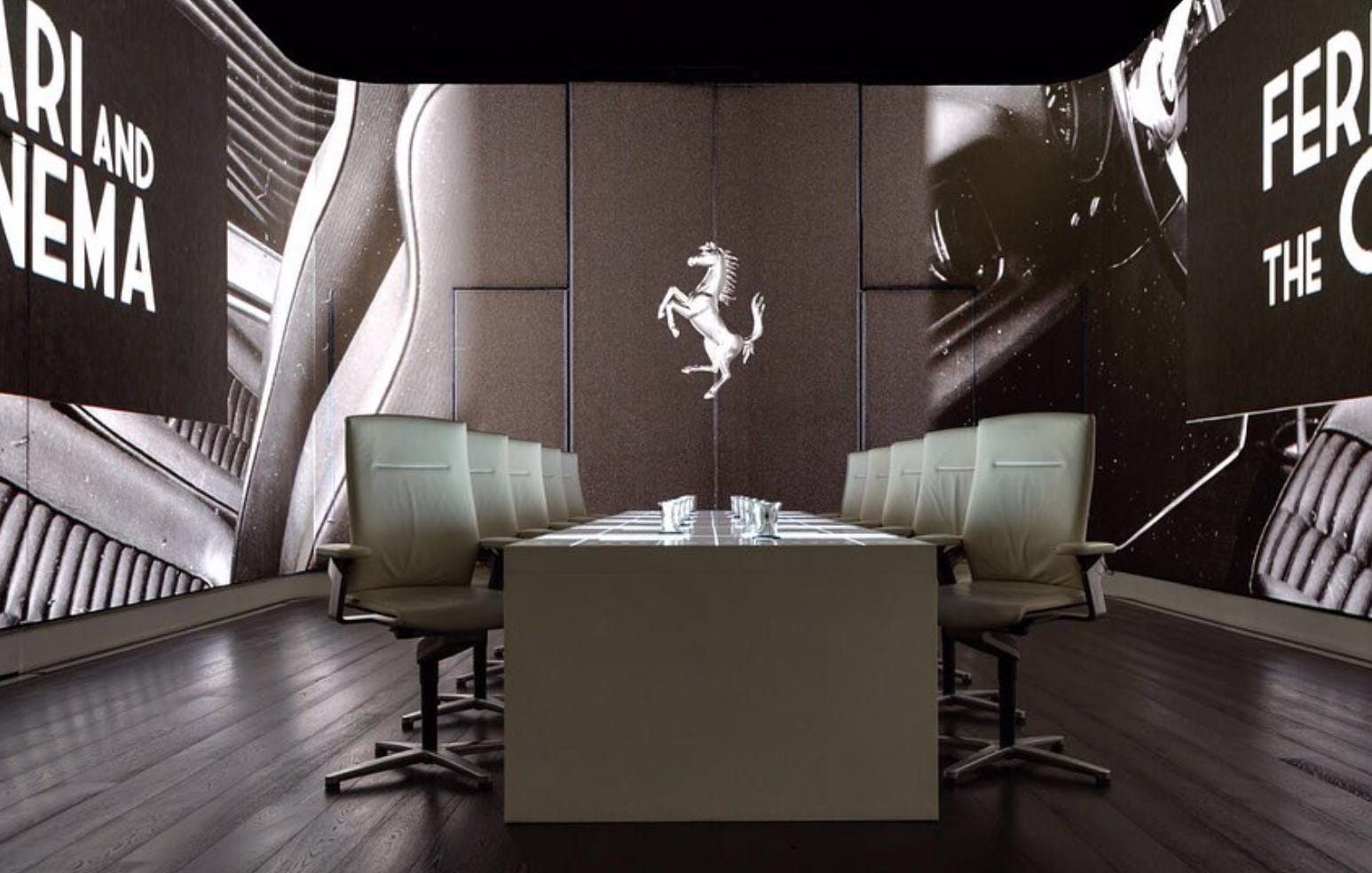
Laila Gohar is at the opposite end of this spectrum because she doesn’t run a traditional restaurant at all. Actually, she stages edible worlds inside fashion shows, gallery spaces, and brand “environments”. Think about food as ornaments, architecture, or even performances. This is some sort of “hospitality meets hunger”, and it represents something structurally fascinating; that fine dining has leaked out of restaurants and into culture. So Gohair solves for both status fatigue and visual sameness by refusing the dining format entirely. The world’s first Michelin-starred runway food?
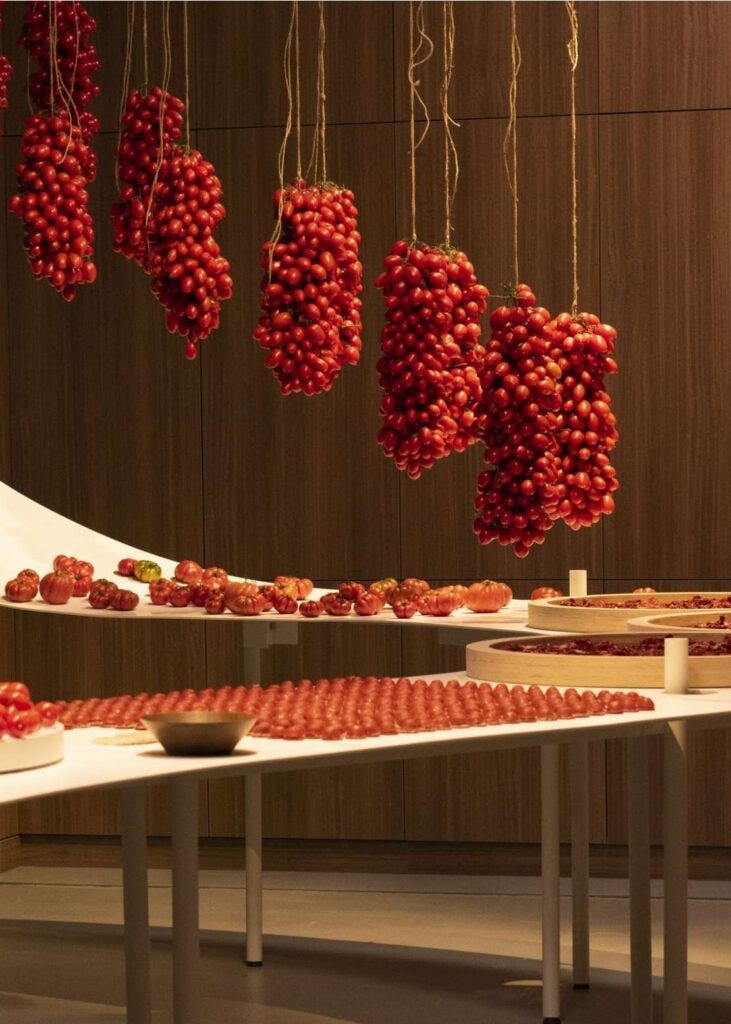
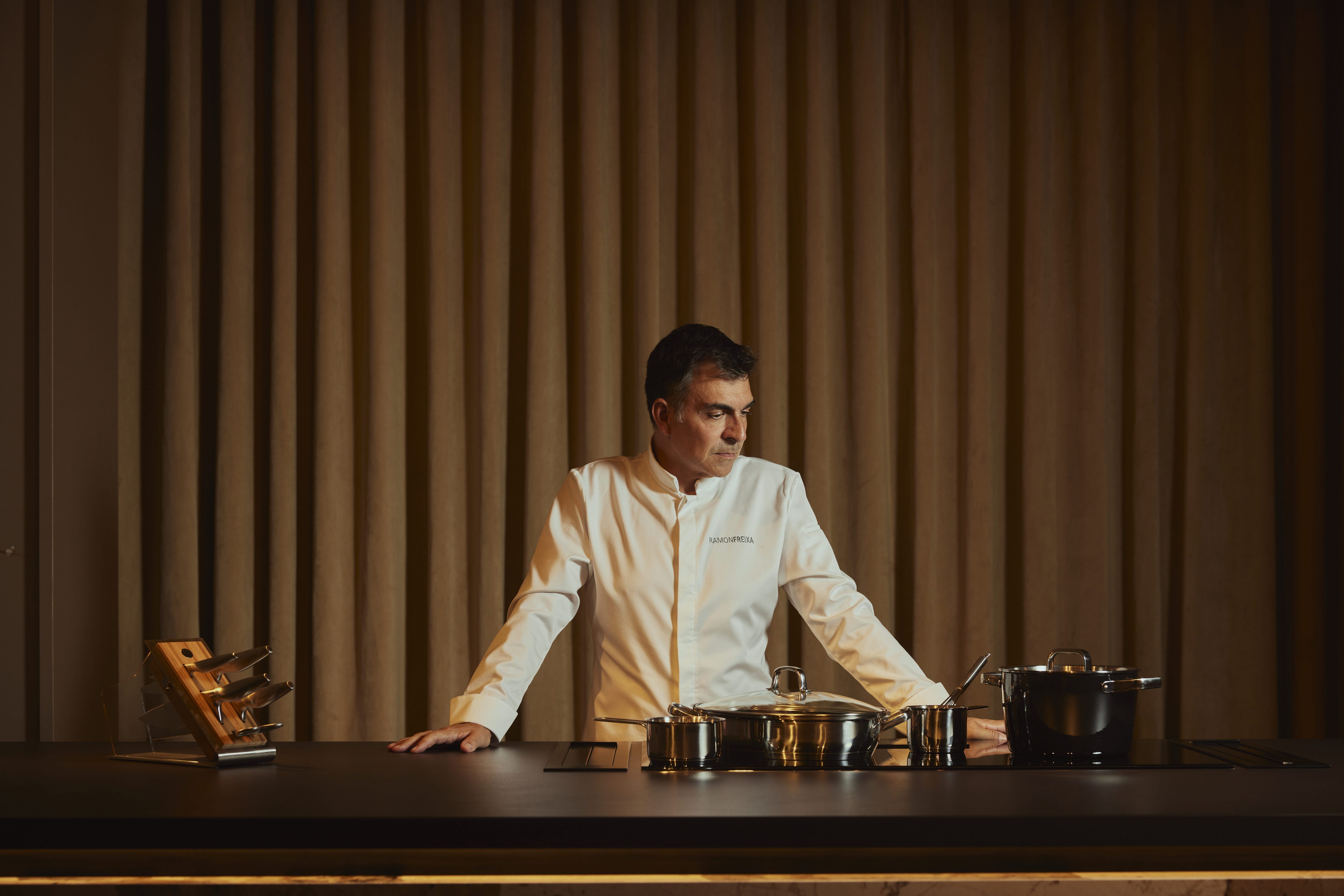
Ramón Freixa in Madrid is actually a culinary highlight that I’ve experienced and recommend heavily! It has two Michelin stars (don’t hold this against it!), a small tasting room, limited seats, and tight sequencing. The scarcity here is, interestingly, social. The entire restaurant is essentially a dinner party with total strangers at the Chef’s Table; and its proposition is simple: you cannot mass-produce presence and making new friends. Everything that makes the experience valuable is precisely what cannot be replicated at volume.
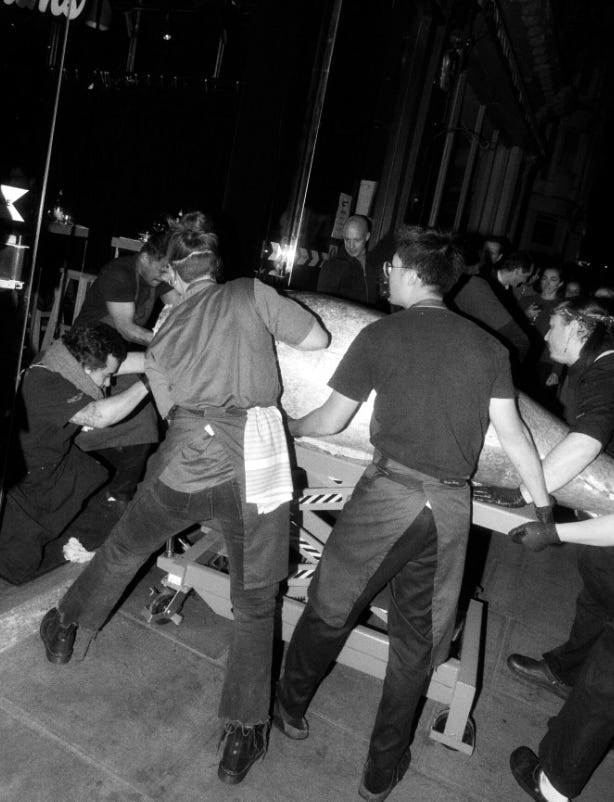
Tuna Fight Club is right around the corner from my house and a total fucking scene. It’s a ticketed event, but you can’t get tickets online. There’s a Whatsapp number that sometimes, only briefly, appears on their instagram page, and you text to ask for an invite to the Tuesday night affair. It’ll be you and a few other tech bros in the basement of a very strange miniature supermarket called Supermarket of Dreams; and the chefs will unload an entire tuna fish from a van, before wheeling it downstairs. The entire event (which is probably the price of a 2-3 star) is about five hours long, and the chef cuts up the raw tune and dishes various parts of it around the room while a DJ and copious amounts of champagne keep you occupied.
So pretty much the only thing that these four have in common is that they structurally mutate the dining experience. Each is solving a different broken thing (e.g. attention collapse, cultural sameness, loss of intimacy, social fragmentation), and each requires the chef to become something Michelin’s framework never anticipated. Pairet is a movie-food director. Gohar is a food sculptor. Freixa is a dinner host. Tuna Fight Club’s orchestrators are something closer to barbaric-fish-enthusiasts.
But none of them are Escoffier-type managers optimizing for consistency, and the entire Michelin system that was built to reward consistency has no language for what they are actually doing.
What Luxury Actually Means Now
Luxury has mutated, and most of the industry hasn’t caught up, sadly.
It is no longer about ingredient cost, complexity, or visible labor. The old markers of luxury like wagyu, truffle, gold leaf (sorry, Marchesi!) still exist, and they certainly function, but they function as signals of a system that used to mean something. It’s tired.
The new luxury operates on three different axes entirely.
Non-repeatability. This is true scarcity, and it’s far more powerful than material scarcity because it’s existential rather than economic. Every “members only” restaurant will eventually let you in as they go broke. But you cannot buy back the evening of March 14th.
Insider access. You feel initiated. Not in a gross, velvet-rope, exclusionary sense (although some of that exists too, obviously), in the sense of proximity to excellence. You are close enough to see how it works. You can literally touch the tuna and choose your cut from the animal itself as the sushi chef gets to work. You sit at Freixa’s table while he explains, to you and only your table, why he made this dish this way. The knowledge transfer is the luxury. You don’t just consume the expertise, you witness it, and you leave understanding something you didn’t understand before about a place, a tradition, a technique, a philosophy.
Transformation. You leave fully altered. Something has shifted in how you think about food, or place, or season, or a memory. This sounds abstract, but when it happens, it’s unmistakable. It’s the reason people have reported cried at Asador Etxebarri in Spain, and it has nothing to do with the price of the beef.
Today, western elite dining is no longer about how good it tastes because everything tastes good; but about who you become by being there, what story you temporarily inhabit, and what part of yourself the experience activates. It is trying desperately to help us escape the content generating capsules that Michelin restaurants have become in a secular and overstimulated civilization.
We live in a world of almost infinite abundance and almost zero meaning. Of course, this is a problem that goes far beyond restaurants in terms of solutions. We have more entertainment than any generation in human history and fewer occasions that genuinely mark time. The restaurants that understand this and that recognize dining’s potential to function as an ideology for people who don’t believe in anything anymore will genuinely define the next era.
And this brings me neatly to Part III, where I’ll dig into Japan, because the Japanese food system has been solving this exact problem (of meaning under abundance) for centuries, and in ways that the Western system is only now beginning to replicate.
Fine dining is certainly very experiential these days. The tuna fight club sounds insane!